Saddle setback and KOPS: a useful convention, not a law of physics
Knee-over-pedal-spindle has guided saddle fore-aft since the 1970s. The physics behind it doesn't hold up — yet it lands most riders somewhere sensible. What setback really changes, typical ranges, and the height coupling that catches everyone.
Published 8 July 2026 · OpenBikeFit
On this page
Keep the move reversible
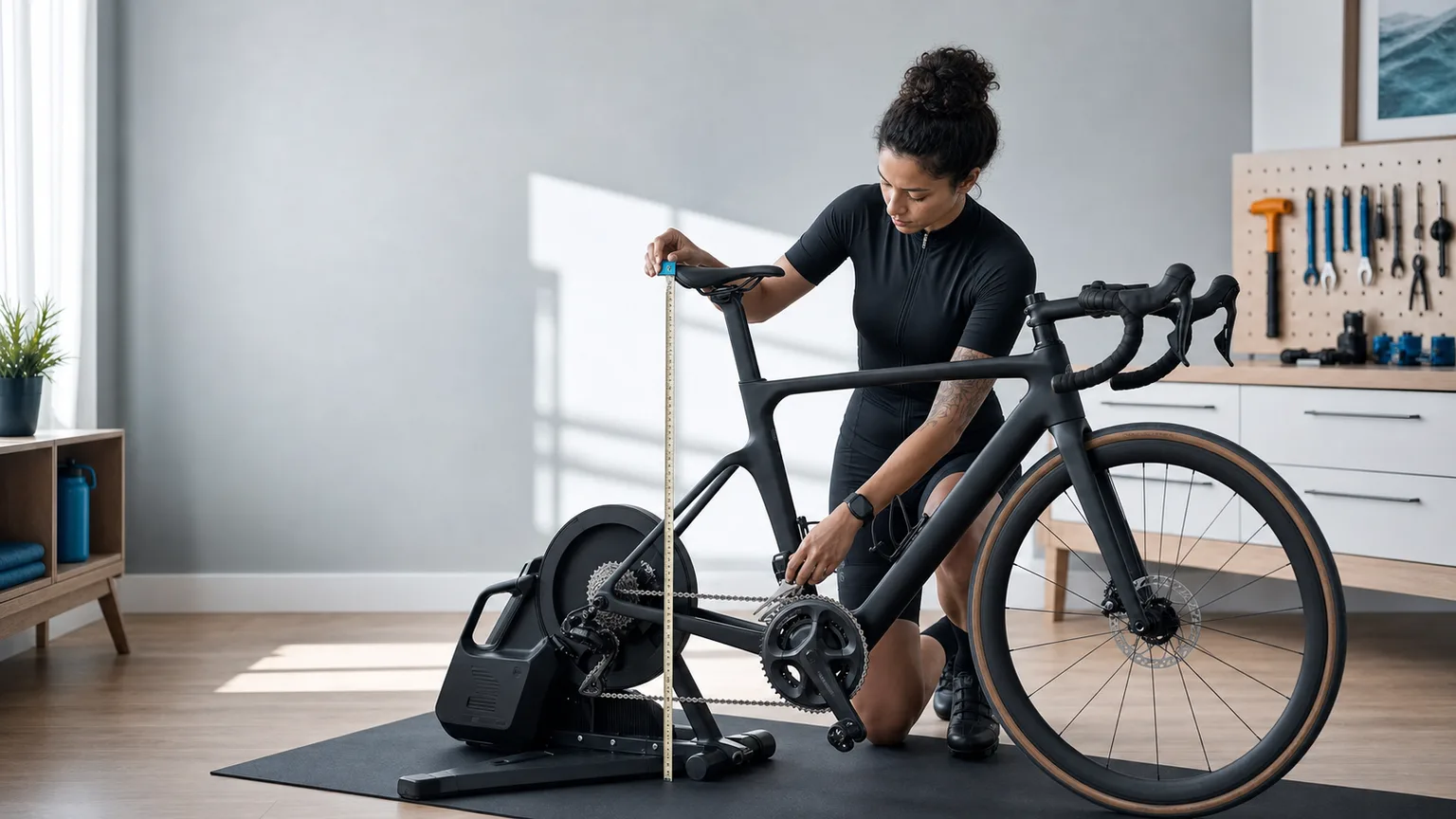
Plan one fore-aft change
Freeze the measured setback, choose one small signed change and re-check the same bike.
Open toolSlide a saddle along its rails and you're touching the most argued-over centimetres in bike fitting. The argument even has a name: KOPS — knee over pedal spindle — a rule so entrenched that many riders assume it's physics. It isn't. It's a 1970s workshop convention that happens to put most people somewhere sensible, and the difference between those two things starts to matter the moment your knees hurt.
The quick answer
Setback is how far your saddle nose sits behind the bottom bracket, measured with a plumb line. For road and gravel, most adults end up somewhere around 5–8 cm, in a band that scales with inseam (about 8% of inseam as the midpoint — our free calculator computes yours). KOPS is a legitimate way to land in that neighbourhood; just don't defend it as a law of biomechanics, because it isn't one. And whenever you move the saddle fore-aft, re-check saddle height — the two are geometrically coupled.
What setback is, and how to measure it
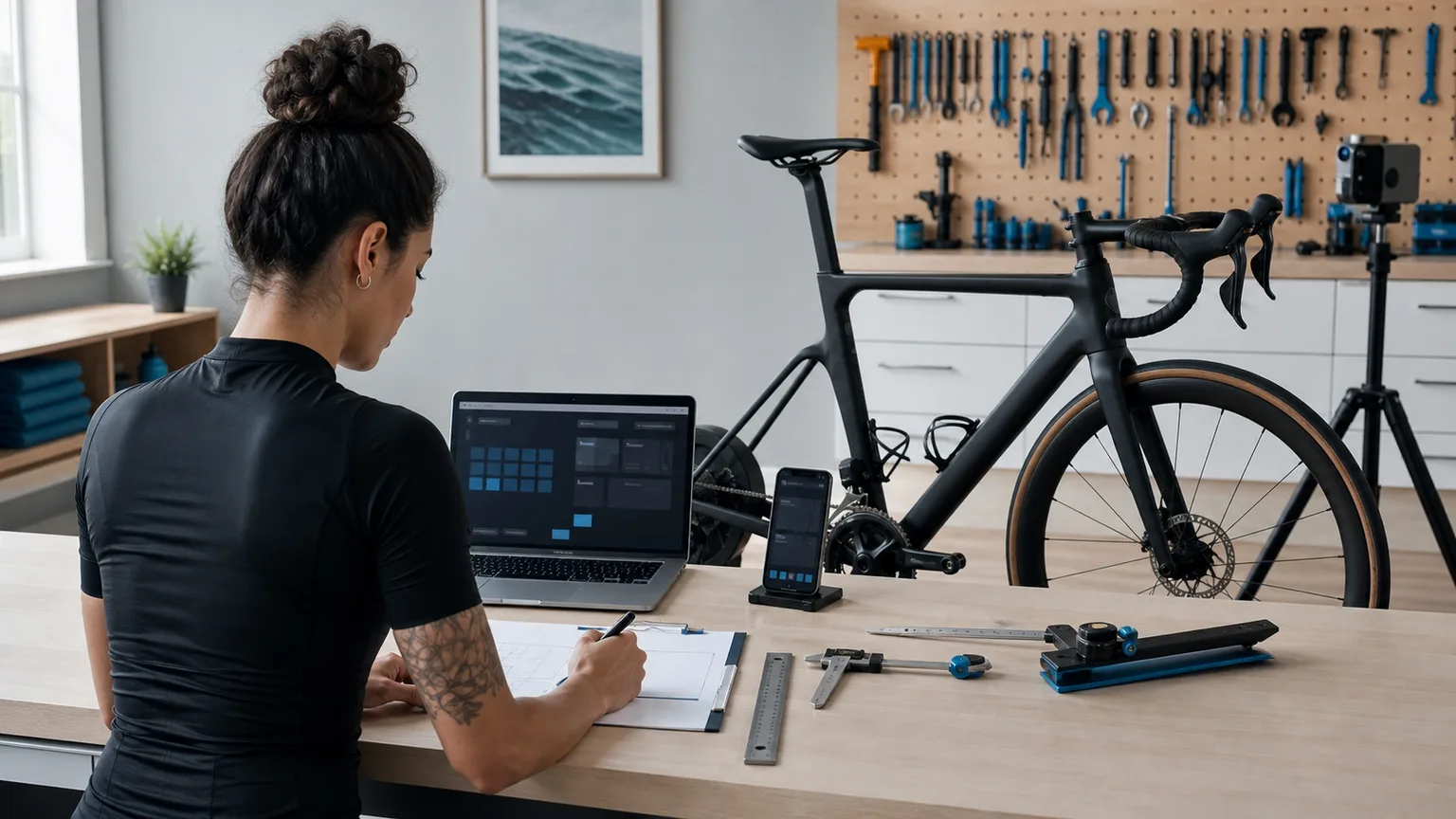
You need level ground, string, and something small and heavy.
- Put the bike on a level floor, or in a trainer checked with a spirit level.
- Hang a plumb line — string plus a nut or a key — from the tip of the saddle nose.
- Measure the horizontal distance from the string to the centre of the bottom-bracket axle. That's your setback.
Don't confuse this with your seatpost's advertised 'setback', which is the clamp's offset from the post centreline — a component spec, not your position. Your position is the plumb-line number.
Why measure at all? Because 'it feels fine' isn't transferable. A recorded setback lets you restore your position after a slipped post, replicate it on a new bike or saddle, and make changes you can actually undo. Fitting without notes is how riders end up chasing their own tail.
KOPS, explained without the mythology
The method: sit on the bike in your normal riding posture with the cranks horizontal — the 3 and 9 o'clock position. On the forward leg, find the tibial tuberosity (the bony bump just below the kneecap) and hang the plumb line from it. KOPS says the string should pass through the pedal spindle. Falls ahead of the spindle? Slide the saddle back. Behind? Slide it forward.
It's quick, repeatable, and needs nothing but string — which is why clinical reviews of bike fit still list it among the practical starting points (Silberman et al., 2005). You'll also meet variants: plumb from the kneecap itself, or 'KOPS plus a centimetre'. That negotiability is itself a tell — a rule this flexible was never a law.
Bontrager's critique — and what survives it
The canonical takedown is Keith Bontrager's essay 'The Myth of K.O.P.S.'. The core argument: a plumb line references gravity, but pedalling forces don't act along gravity — they act around the crank axis. There is no mechanical reason a knee must stack over the pedal spindle at one arbitrary crank position. The cleanest counterexample is the recumbent bicycle: recumbent riders produce power perfectly well with their knees nowhere near 'over' the pedals. Whatever KOPS measures, it isn't a requirement of the pedalling machine.
But Bontrager's essay has a second half the internet quotes less often: on a conventional upright bike, putting the knee over the spindle tends to balance the rider's weight reasonably over the bottom bracket. That's why the rule survives — not because the plumb line means anything, but because the position it produces is usually a decent one. A heuristic in a lab coat. Use it to start; let measurement and symptoms refine it.
What setback actually changes
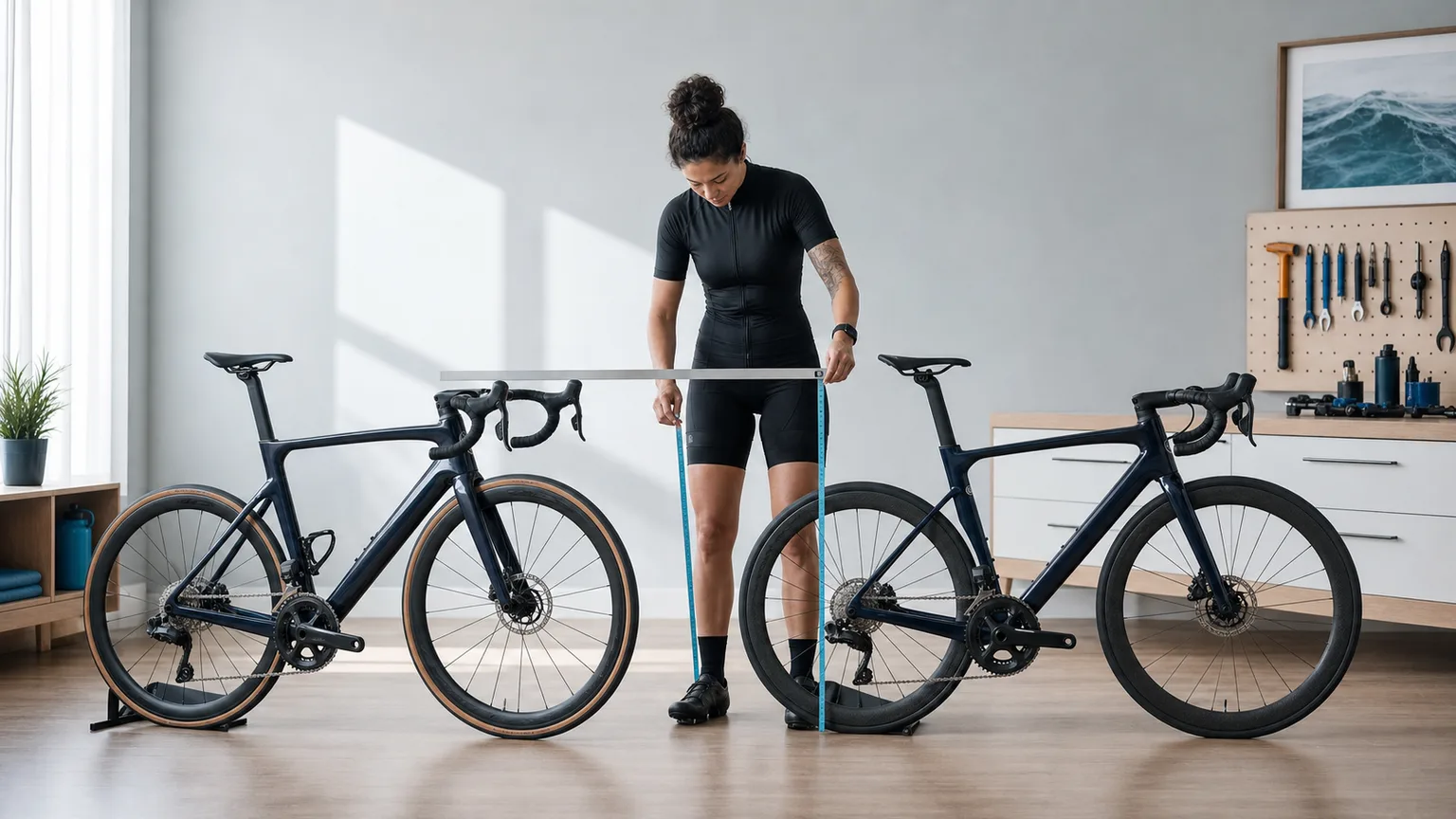
Two things dominate. First, weight distribution: saddle back shifts load toward the saddle and lengthens effective reach to the bars; saddle forward does the reverse. Second, knee mechanics: Ménard et al. (2020) found different model-estimated tibiofemoral compression across forward and backward conditions in ten cyclists. That small modelling study shows that setback matters, not which direction a person with pain should move.
Pain location alone is not a setback prescription. Verify saddle height and measurement references first, stop for red flags, and if a mechanically safe trial is appropriate, move only 1–10 mm with a marked baseline and a planned reversal.
Typical ranges — and the racing rule
- Road and gravel: a band centred near 8% of your inseam — roughly 5–8 cm for most adults. A sensible band spans about 75–115% of that midpoint; there is no single correct millimetre.
- TT and triathlon: deliberately far forward — much smaller setback — to keep the hip open in a low tuck. A different position for a different job.
- City and MTB: in between; upright postures tolerate a wide range.
- UCI licensed racing: Technical Regulations art. 1.3.013 requires the saddle nose to sit at least 5 cm behind the bottom-bracket vertical, with morphological exemptions for riders who genuinely can't comply. It's a fairness rule for sport, not a statement about your body.
The height coupling: fore-aft is never just fore-aft
Because the saddle sits on a seat tube angled back — roughly 73° on a typical road frame — fore-aft and height are coupled: slide the saddle back and you've also moved it slightly further from the pedals. The working rule: every 2 mm of setback changes effective saddle height by about 1 mm. Treat any fore-aft change as a two-step job: move, then re-check height. A side-on pedalling video (or our camera check) tells you whether your knee angle survived the move — the target band hasn't changed just because the saddle slid.
The honest summary: setback has one solid peer-reviewed anchor (knee-joint forces respond to fore-aft position), one durable convention (KOPS as a starting heuristic), one rule that only matters with a number pinned on (the UCI's 5 cm), and a coupling that catches almost everyone once. Start in the band, move in small steps, re-check height every time, and let your knees and hands vote.
Practical questions
Frequently asked questions
What is KOPS in bike fitting?
KOPS stands for 'knee over pedal spindle': with the cranks horizontal, a plumb line hung from the bony bump below your kneecap (the tibial tuberosity) should pass through the forward pedal's axle. It's a quick 1970s convention for setting saddle fore-aft position — useful as a starting point, not a biomechanical requirement.
Is the KOPS method wrong?
Its justification is wrong; its result is usually reasonable. As Keith Bontrager's classic critique showed, a gravity plumb line has no special meaning for pedalling forces, which act around the crank axis — recumbent riders pedal effectively with their knees nowhere near the spindle. On a conventional bike, though, KOPS tends to balance the rider's weight over the bottom bracket, which is why it lands most people in a sensible range.
How much saddle setback should I have?
For road and gravel, a practical starting band centres on about 8% of your inseam — roughly 5–8 cm behind the bottom bracket for most adults. Time-trial and triathlon positions sit deliberately much further forward. Fine-tune within the band using knee comfort and hand pressure, not a single magic number.
Does saddle setback affect knee pain?
It can change model-estimated knee-joint forces, but the available study does not establish that a particular pain location should move the saddle forward or backward. Check red flags and saddle height first; use pain only as a signal to investigate, not as a diagnosis or direction selector.
What is the UCI rule on saddle setback?
UCI Technical Regulations art. 1.3.013 requires the saddle nose to sit at least 5 cm behind the vertical plane through the bottom-bracket axle in licensed racing, with morphological exemptions available. It's a competition-fairness constraint, not a fitting recommendation — and it doesn't apply to your bike unless you race under those rules.
Evidence trail
Sources
- conventionBontrager K. (1998). The Myth of K.O.P.S.. Bicycle Guide (reprint: sheldonbrown.com)
- peer-reviewedMénard M., Domalain M., Decatoire A., Lacouture P. (2020). Influence of saddle setback on knee joint forces in cycling. Sports Biomechanics, 19(2):245–257 · PubMed 29920153
- peer-reviewedSilberman M.R., Webner D., Collina S., Shiple B.J. (2005). Road bicycle fit. Clinical Journal of Sport Medicine, 15(4):271–276
- conventionUCI (2024). UCI Technical Regulations, art. 1.3.013. Union Cycliste Internationale