Loading…
Free local bike-to-bike workflow
Transfer a complete measured bike setup, one field at a time
Choose a source and target bike saved on this device. OpenBikeFit compares their complete setup passports, blocks incompatible references, returns exact signed differences, builds a staged plan and requires a measured keep, revert or safety-stop re-check.
The tool reproduces recorded coordinates; it does not decide that the source setup is ideal for another bike, score fit quality, prove mechanical compatibility or update either profile automatically.
FreeNo accountProfiles stay on this deviceNo fit score
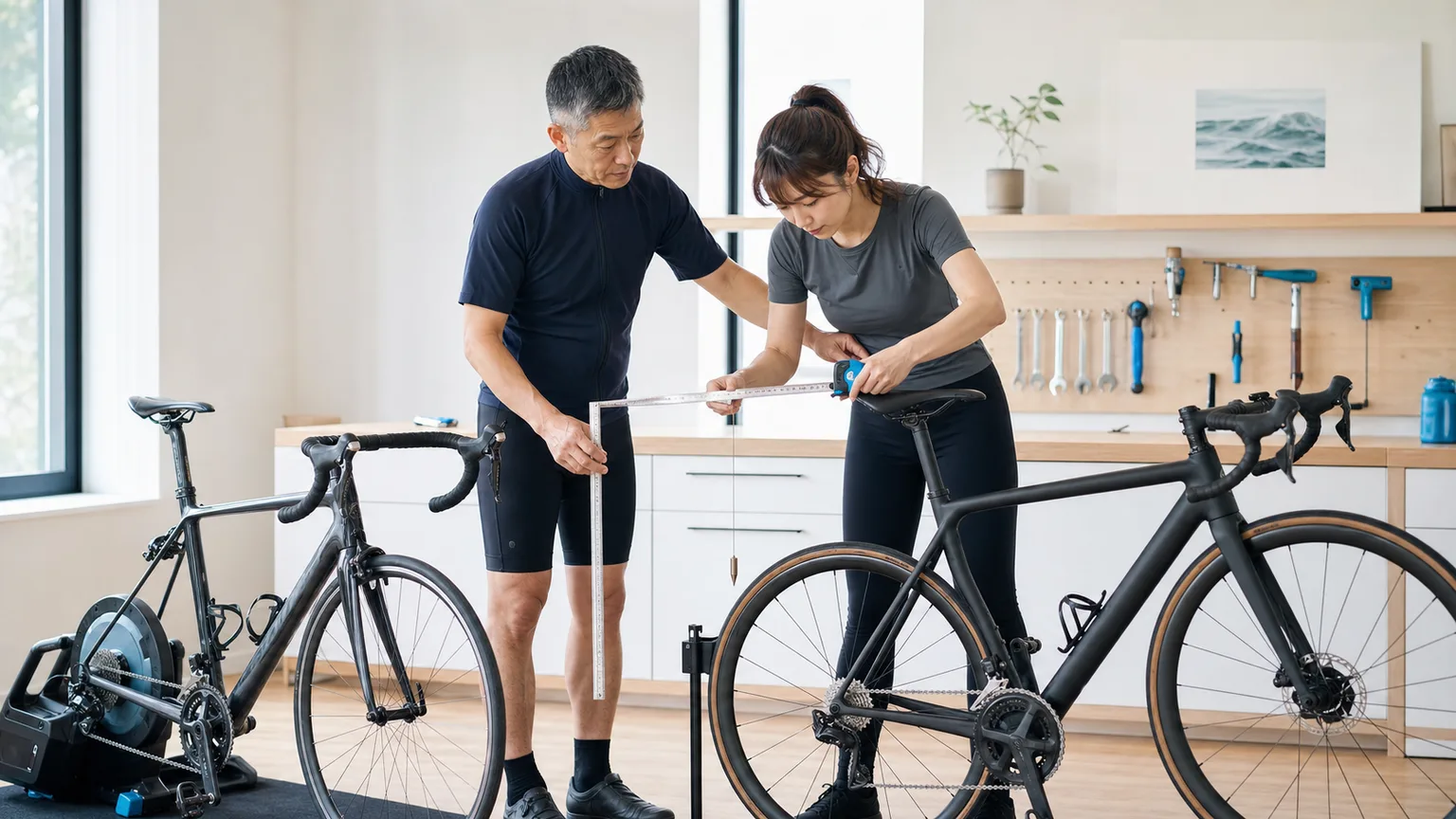
Transfer references, not assumptions
Two bikes need two complete physical baselines
Measure each bicycle independently with the same definitions before planning a transfer. Matching one saddle or cockpit number does not make the frames, components or handling identical.
Only want to inspect two exported profiles without creating local bikes or a transfer plan? Compare private setup files in Settings.
Opening local bike passports…
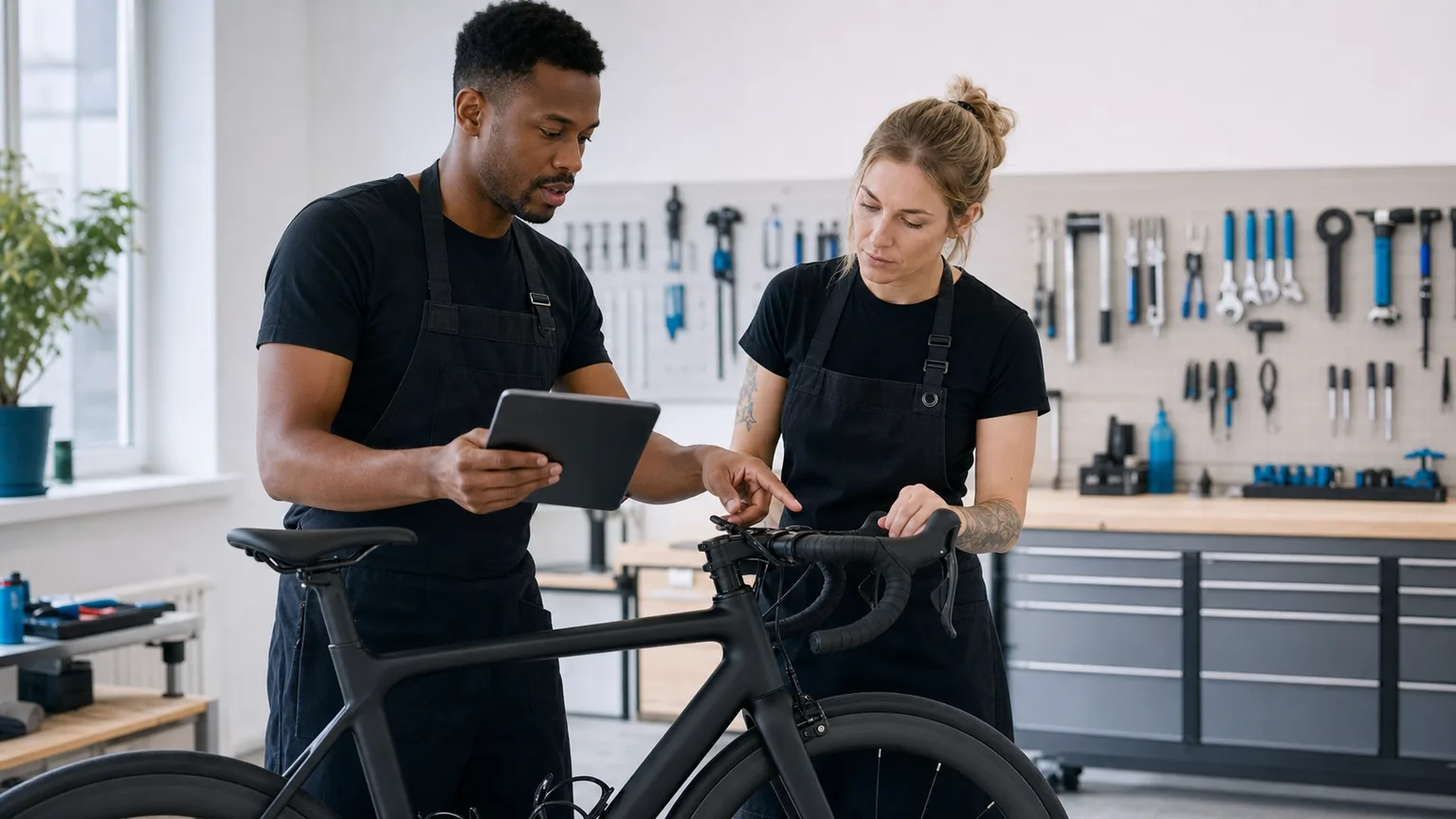
Close the mechanical hand-off
A target becomes physical only after component-specific review
Carry the frozen baseline and requested target to the mechanic, then record what was actually installed. Compatibility, routing and exact manual limits still override the transfer plan.
Visible workflow
How to move from saved values to a measured decision
Choose source and target bikes
Select the saved setup to reproduce and the bike that may be adjusted. Confirm equivalent measurement references separately for contact coordinates, saddle tilt, hood angle and hood height.
Compare the complete setup passport
Review contact coordinates, saddle and hood details, crank length and bar, stem and frame context. Cockpit reach or drop stays blocked unless both structured datums describe the same physical points and measurement method.
Follow the staged transfer plan
Change one selected field at a time from the frozen target baseline toward the source value, then physically remeasure before starting the next step.
Complete a measured keep, revert or stop re-check
Take two or three repeated readings for every selected field, resolve the median inside the named OpenBikeFit product matching windows, confirm a return to the target baseline, or record a safety stop without further measurement.
Full passport, honest boundaries
Contact targets and mechanical context stay separate
Transfer candidates are saddle height and setback, cockpit reach and drop, saddle tilt, hood angle and hood height. Crank length, bar width, stem length and frame stack or reach remain visible context; changing crank length belongs to its separate component workflow, and context is never silently converted into hand or saddle coordinates.
Target minus source is reported exactly. The target adjustment is its opposite. A delta appears only when both values exist and their required written references match and are explicitly confirmed. Cockpit reach and drop additionally require matching structured saddle station, contact convention, bar-point type and written point, plus the same levelling and horizontal/vertical measurement methods. The compatible datum is frozen with the transfer step so a later profile edit cannot silently redefine it.
Re-check windows of ±5 mm for the four contact coordinates, ±1° for saddle or hood angles and ±3 mm for hood height are OpenBikeFit product workflow conventions. Every field uses two readings, or three when the first pair exceeds its repeatability convention. These are not clinical limits or claims about measuring-tool accuracy.
Stop overrides the plan
Mechanical limits and warning symptoms are not coordinate problems
Before changing a component, check manufacturer instructions, torque, steerer engagement, clamp zones, saddle-rail limits, cable or hose length and available adjustment. A numerically possible target can be mechanically impossible on the target bike.
Stop for pain, numbness, weakness, circulation warning signs, instability, loss of control or any unsafe mechanical condition. The safety-stop snapshot requires no further measurements and does not diagnose the cause.
Large exact delta does not mean one large DIY adjustment.
OpenBikeFit keeps the final source coordinate visible, but flags a transfer that exceeds its one-step product cap. That field must go to a qualified mechanic/fitter or be approached in smaller, manufacturer-supported stages with a fresh measurement after every stage. These caps limit the software workflow; they are not clinical thresholds, component clearances or evidence that the final position will be comfortable. The exact component instructions and the rider's safety response always override the plan.
Prepare two trustworthy local profiles first
Missing values stay missing and mismatched references stay blocked. Measure or edit the profiles in My Bikes, then return to build a transfer plan from actual saved data.