How much does a bike fit cost — and when is a studio fit worth it?
Studio fits run $150–400 (300–800 zł in Poland) for 2–4 hours of expert attention. What that money actually buys, what a free science-based starting point covers, and the sensible order to spend in.
Published 8 July 2026 · OpenBikeFit
On this page
See the product boundary
Preview the complete workflow
Walk through OpenBikeFit with synthetic data before deciding what you still need from a studio.
Open toolAsk what a bike fit costs and you get two kinds of answers: a price — typically $150–400 in the US and much of Western Europe, roughly 300–800 zł in Poland — and an argument about whether it's worth paying. Both halves deserve an honest answer, because the right one genuinely depends on who you are, what hurts, and what you want from the bike.
The quick answer
A professional studio fit costs $150–400 (300–800 zł) and takes 2–4 hours. It is clearly worth it if you have persistent pain, an injury history, racing ambitions, an aggressive time-trial position, or a body that formulas don't describe well. For most recreational riders the sensible sequence is: start with a free, science-based baseline, ride it for a few weeks, and pay a professional only if specific problems persist. You lose nothing by starting free — a sensible starting position makes a later professional fit easier, not harder.
What you're actually paying for
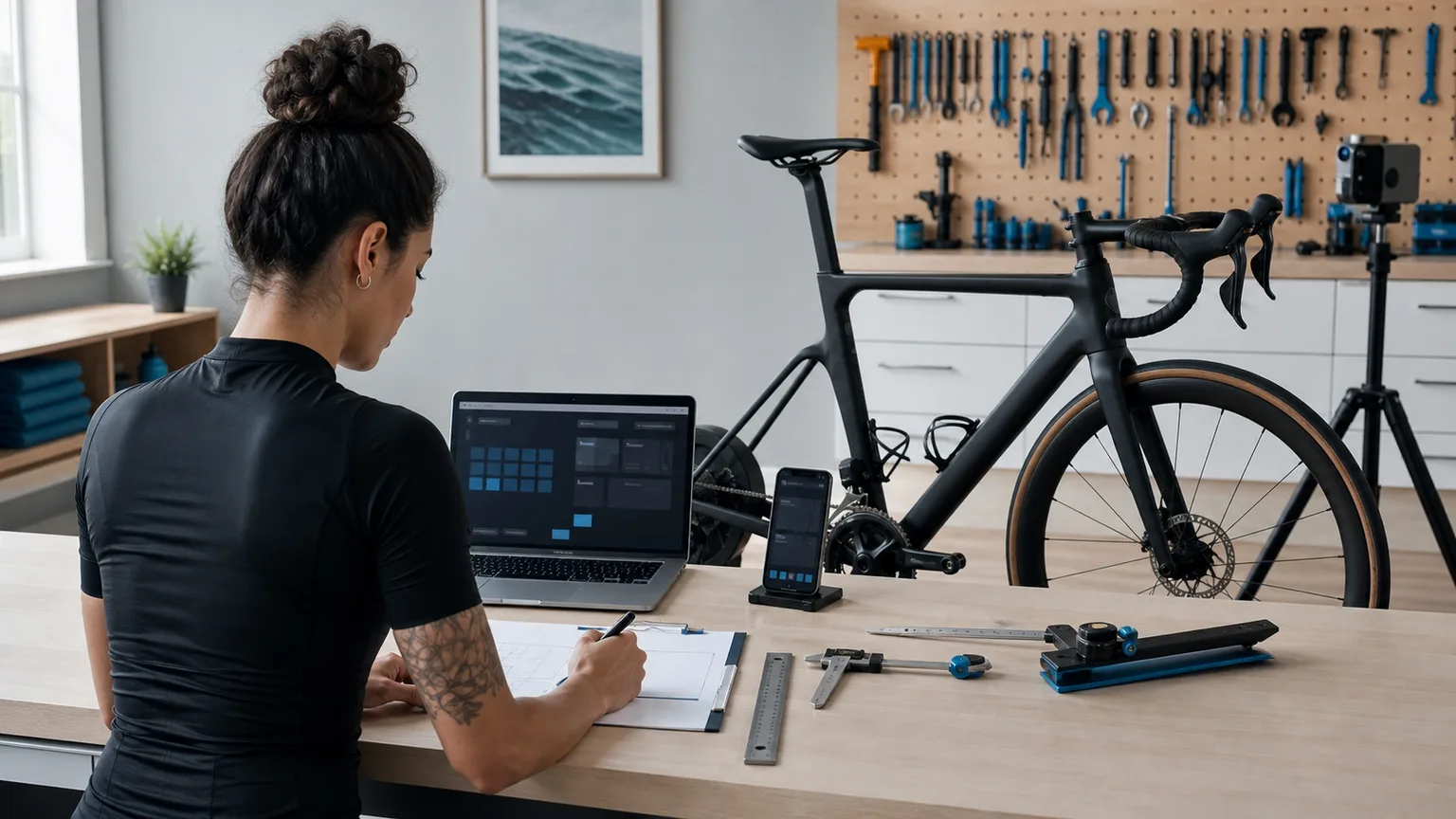
A good studio fit is not a secret measurement ritual; it is two to four hours of a trained person's structured attention. A typical session includes:
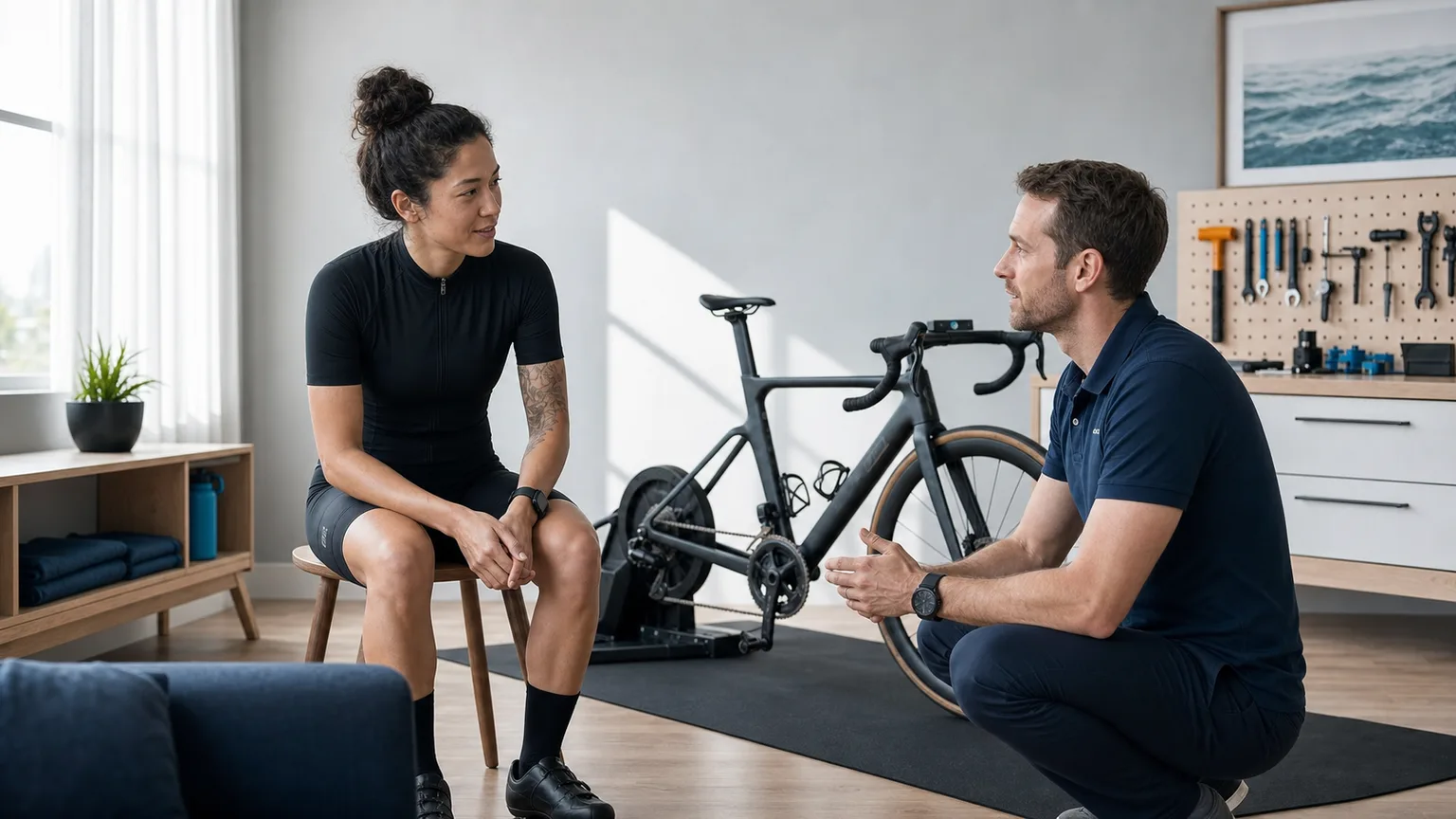
- An interview. Riding history, goals, injuries, and what specifically bothers you. Good fitters spend real time here, because this decides what 'better' means in your case.
- A physical assessment. Hamstring and hip flexibility, joint range of motion, leg-length differences, foot structure. This is the part no formula or app can see.
- Dynamic measurement. Video or marker-based motion capture of you actually pedalling, sometimes with saddle pressure mapping to show where your weight really sits.
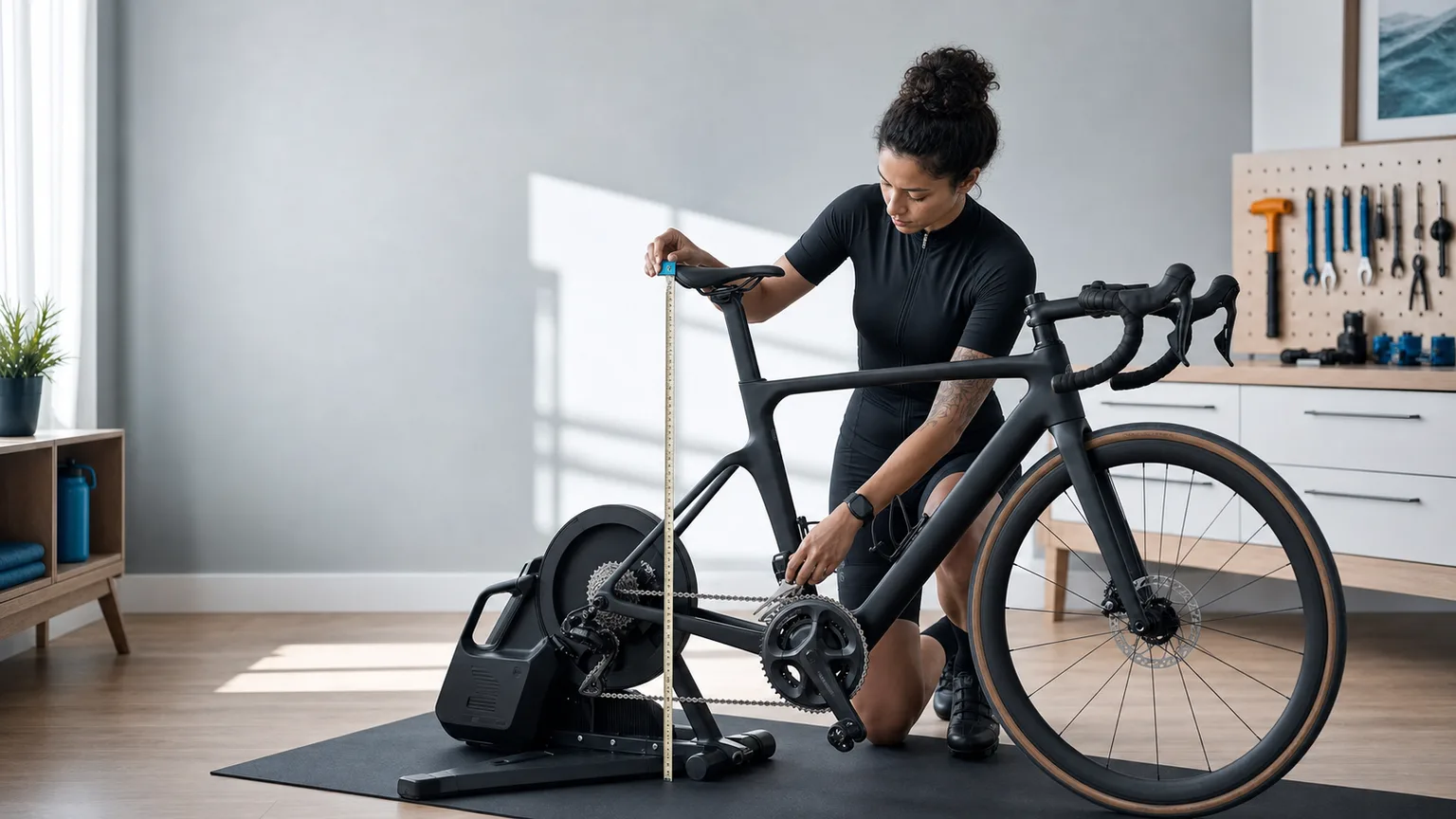
- Hands-on adjustment. Saddle height, setback and tilt, cleats, bar height and reach — changed in small steps while you ride, and re-measured after each change.
- Follow-up. Bodies adapt over weeks; a good service includes a re-check, or at least a written record of what was set and why, so every change is reversible.
Where you land inside the price range mostly reflects tooling and time: marker-based motion capture and pressure mapping cost more than an experienced eye and a plumb line, and packages with follow-up visits sit at the top. More measurement is not automatically a better decision, though — the judgement is the product.
When paying is clearly the right call
Some situations shift the maths decisively toward a professional:
- Persistent pain that has survived sensible self-adjustment. If you've made careful one-at-a-time changes and a knee or your back still complains, you need eyes and hands, not another formula.
- An injury history. Old surgeries, chronic conditions and past overuse injuries change what a safe position looks like — this is clinical territory, and the medical bike-fit literature exists precisely because position and injury interact (Silberman et al., 2005; Castilla Pikaza & Iriberri, 2025).
- Racing. When the last few percent matter, individual optimisation and repeated verification are exactly the product you're buying.
- Time-trial and triathlon positions. Aggressive aero positions sit far outside the comfort envelope, and the line between fast and harmful is individual. This is the worst place in cycling to guess.
- Suspected structural asymmetry, such as a leg-length difference. Formulas assume symmetric, average proportions; you may need shims, cleat work, and someone qualified to decide.
One boundary matters more than any of these: a bike fit is not a medical service. Pain that persists off the bike, wakes you at night, or comes with numbness that lingers belongs with a physiotherapist or doctor first — and a good fitter will tell you the same.
What free tools cover — and what they honestly can't
The free, science-based baseline is real, not a teaser. Our calculator turns an inseam measurement and a few questions into a full starting fit — saddle height by three published methods, setback, bar drop, crank guidance — with the source and evidence level shown next to every number. Our camera check then measures your actual knee angle from a phone video, which matters because the best-supported target in all of bike fitting is a knee angle, not a formula (Bini et al., 2011).
It's worth knowing how far the science itself reaches. The most recent systematic review of position research (Husband et al., 2024) screened 16,578 studies and concluded that scientific consensus exists for exactly one variable: saddle height. Of the 47 studies it analysed in depth, it rated none 'good', 5 'fair' and 33 'poor'. That cuts both ways. A free tool built on the same evidence covers a real share of what any fit can honestly claim as science — and much of what a studio adds beyond that is expert judgement rather than published fact. Expert judgement is genuinely valuable. It is also a different product, and you should know which one you're buying.
What a formula-and-camera approach cannot do: feel how your joints move, detect a leg-length difference, map saddle pressure, watch you from three angles as you fatigue, or take responsibility for a decision. If any of those is what you need, no app — ours included — is the answer.
The sensible sequence
- Start free. Measure your inseam, get a calculated baseline, set the bike up, and film a side-on pedalling clip to verify your knee angle. It's an evening's work.
- Change one thing at a time, in small steps, with 2–3 rides between changes, so you can tell which change did what.
- Escalate on red flags. Pain off the bike, night pain, lingering numbness, anything after a crash: skip the fitter and see a physiotherapist or doctor first.
- Book the professional deliberately — when a stubborn problem survives your sensible adjustments, when you're chasing race performance, or when you simply want expert hands. Bring your notes on what you tried; it makes the session better.
None of this is scepticism about fitters. A good one earns the fee exactly where formulas run out: unusual bodies, stubborn pain, extreme positions. The point is the order of operations — for most riders, free first isn't the cheap option, it's the correct one.
Practical questions
Frequently asked questions
Is a professional bike fit worth it?
For riders with persistent pain, an injury history, racing goals, aggressive time-trial positions or suspected structural asymmetries such as a leg-length difference — usually yes. For a comfortable recreational rider, a free science-based starting position (published formulas plus a video check of knee angle) covers most of what's actually known, and a studio fit becomes worth the money when specific problems persist.
How much does a bike fit cost?
A professional studio fit typically costs $150–400 in the US and much of Western Europe, and roughly 300–800 zł in Poland. That usually buys 2–4 hours covering an interview, a physical assessment, dynamic measurement and hands-on adjustments; packages with pressure mapping or follow-up visits sit at the top of the range.
Can I do a bike fit myself?
You can get a solid starting position yourself: measure your inseam, set saddle height by a published method, verify your knee angle (25–35° static at the bottom of the stroke) from a side-on video, and adjust one thing at a time. What you can't replicate at home is a professional's physical assessment and experienced eye — so self-fit first, and escalate if problems persist.
How long does a bike fit take?
A professional studio fit typically takes 2–4 hours, sometimes with a follow-up visit a few weeks later. A do-it-yourself baseline — measuring, setting the bike, filming a verification clip — is an evening's work, plus a few rides to evaluate each change.
How often should I get a bike fit?
There is no evidence-based interval. Re-fit when something changes: a new bike, new discomfort, an injury, a significant change in flexibility, weight or goals. A position that is comfortable and pain-free doesn't expire on a schedule.
Evidence trail
Sources
- systematic reviewHusband S.P., Wainwright B., Wilson F. et al. (2024). Cycling position optimisation — a systematic review. Journal of Sports Sciences, 42(15)
- peer-reviewedCastilla Pikaza A., Iriberri J. (2025). Injuries caused by poor biomechanical fit in cycling: a narrative review. Journal of Science & Cycling
- peer-reviewedSilberman M.R., Webner D., Collina S., Shiple B.J. (2005). Road bicycle fit. Clinical Journal of Sport Medicine, 15(4):271–276
- systematic reviewBini R., Hume P.A., Croft J.L. (2011). Effects of bicycle saddle height on knee injury risk and cycling performance. Sports Medicine, 41(6):463–476