Handlebar drop: aero is real, but only in a position you can hold
In elite testing the aero position saved ~100 W of drag for ~9 W of metabolic cost — but the flatter your trunk, the worse your body performs. How to measure drop, pick a sensible band, and read the symptoms of overdoing it.
Published 8 July 2026 · OpenBikeFit
On this page
Measure before buying
Compare cockpit coordinates
Model stem, spacer and handlebar changes as signed reach and drop coordinates.
Open toolHandlebar drop — how far your bars sit below your saddle — is where the two honest goals of bike fit argue in public. Lower is genuinely faster, because at road speed the air is the main thing you're pushing against. Lower also loads your hands, neck and lower back — and unlike the air, they hold a grudge. The right question isn't 'how low can I get?' but 'how low can I stay?'
The quick answer
Run the most drop you can hold for your longest typical ride with relaxed shoulders, soft elbows and hands that stay awake. On road bikes that usually means 0–30 mm below the saddle if you're new to drop bars, up to 60–110 mm for a flexible performance racer. Gravel runs less for the same rider; city bars belong at or above saddle height. When in doubt, err higher — an aero position you abandon after twenty minutes is slower than a modest one you hold all day.
What drop is and how to measure it
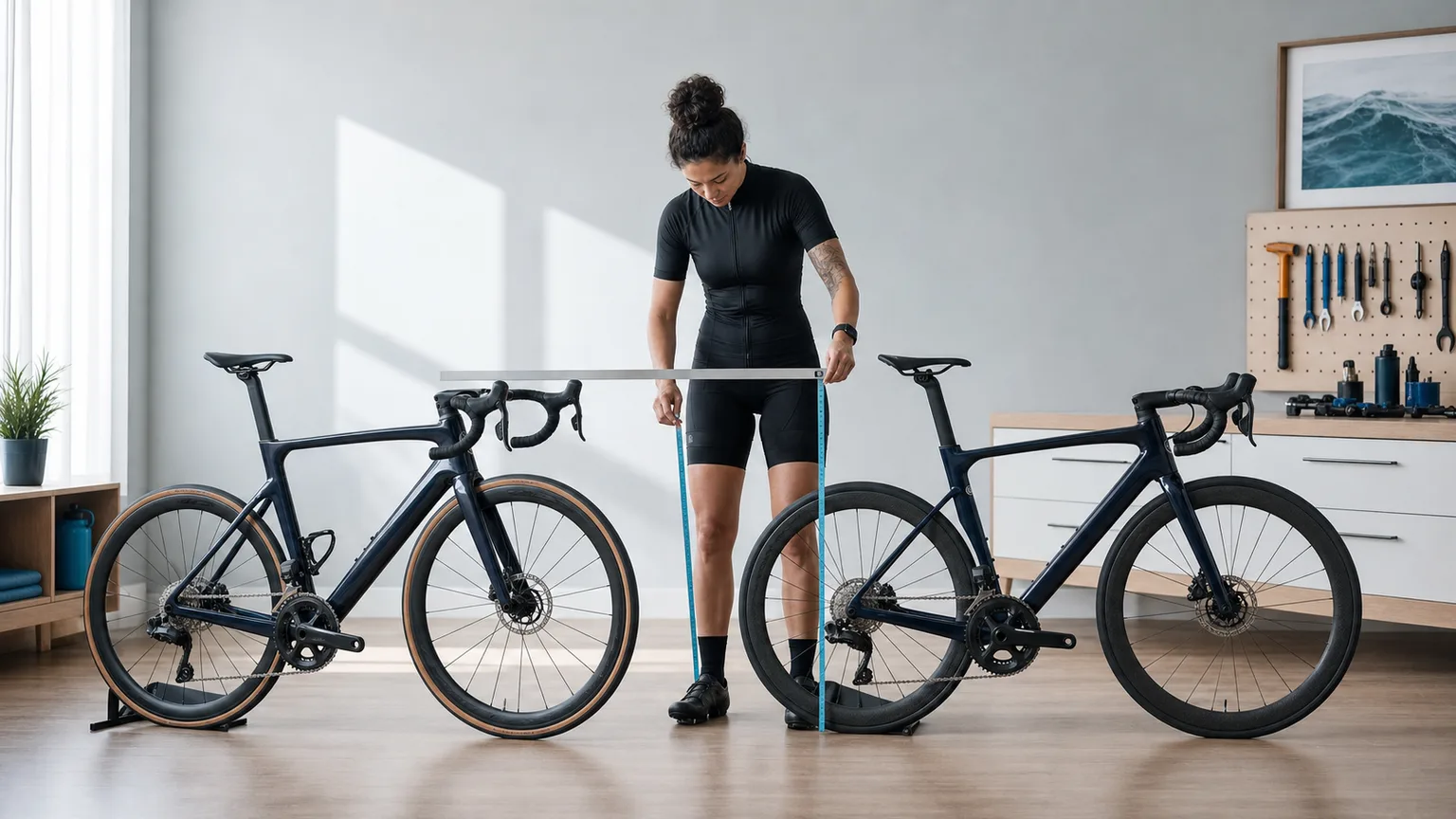
Two measurements and a subtraction:
- Put the bike on level ground.
- Measure vertically from the floor to the top of the saddle at its midpoint — where you actually sit.
- Measure vertically from the floor to the top of the handlebar next to the stem.
- Subtract: (floor → saddle) − (floor → bar) = drop. Positive means bars below the saddle; negative means bars above — which is normal and correct on an upright city bike.
The case for lower: the aero numbers are real
The classic measurement comes from Gnehm et al. (1997), in elite cyclists: riding in a full aero position cost about 9 W more metabolically than sitting upright — while the position saved on the order of 100 W of aerodynamic drag. As exchange rates go that is spectacular, and it's the entire case for drop in two numbers. But notice what the study actually priced: the aero position pays provided it can be held. A position is not what your bike offers; it's what your body sustains.
One wrinkle worth stating: drop is a proxy, not the quantity itself. The wind sees your trunk and frontal area, and two riders with identical drop can present very different backs to it. That's why the bands below have wide edges — and why how a position feels to hold matters more than what the ruler says.
The case for higher: physiology pushes back
Fintelman et al. (2015) measured what flat backs cost. Across trunk angles from 24° down to 0° — a horizontal, time-trial back — physiological measures worsened progressively as the trunk dropped, and the fully flat 0° position was significantly the most expensive. So the trade-off is real in both directions, and it's speed-dependent: the faster you ride, the more the drag saving is worth and the more physiological cost is worth paying. At commuting speeds the aero payoff shrinks while the physiological price doesn't. There is no universally best trunk angle — only the best trade for your speed, your body and your ride length.
Typical bands — convention, honestly labelled
Be clear about the epistemics: drop bands are fitter convention, not settled science. The 2024 systematic review of position research (Husband et al.) found scientific consensus for saddle height only; for everything else the studies give directions and mechanisms, not numbers. With that said, the road bands our free calculator uses:
- New to drop bars: 0–30 mm.
- Intermediate: 20–60 mm.
- Advanced: 40–90 mm.
- Performance racer: 60–110 mm.
Gravel shifts the band toward less drop for the same rider — control on rough surfaces beats marginal aero. Flat-bar city bikes sit at or above saddle height by design: negative drop isn't a fitting failure there, it's the point of the bike.
The flexibility gate
Drop is limited less by ambition than by hamstrings. If your pelvis can't rotate forward, a lower bar gets reached by rounding the lumbar spine and craning the neck — the exact recipe for the symptom list below. A crude but useful gate is the toe-touch test: stand with knees straight and reach for the floor. Touching your toes comfortably opens the top of your band; stopping at your shins should cap your drop — a single input that shifts the recommended band by 10–25 mm.
Position tolerance is also trainable. Riders adapt to lower positions over seasons, which is why the bands step with experience rather than jumping straight to racer numbers. Flexibility first, drop second — the order matters.
Symptoms you've overdone it
Your body reports excessive drop with high reliability; the skill is believing it. The classic signals:
- Numb or tingling hands, usually on the little-finger side: documented ulnar-nerve overload — after a six-day tour, riders showed measurably worsened ulnar-nerve conduction (Akuthota et al., 2005). Too much weight is landing on your hands. Reduce drop or redistribute weight; don't just add another layer of bar tape.
- Neck and upper-shoulder pain: the lower the bars, the more your neck must extend to look up the road. Clinical reviews link drop and reach directly to neck complaints (Castilla Pikaza & Iriberri, 2025).
- Lower-back pain, especially late in rides — the same lever working on the other end of your spine.
- You never use the drops. If you live on the hoods with locked elbows and the drops feel like a dare, the bar is telling you it's too low. Drops you actually use are faster than a slammed stem you can't.
How to change it — cheap moves first
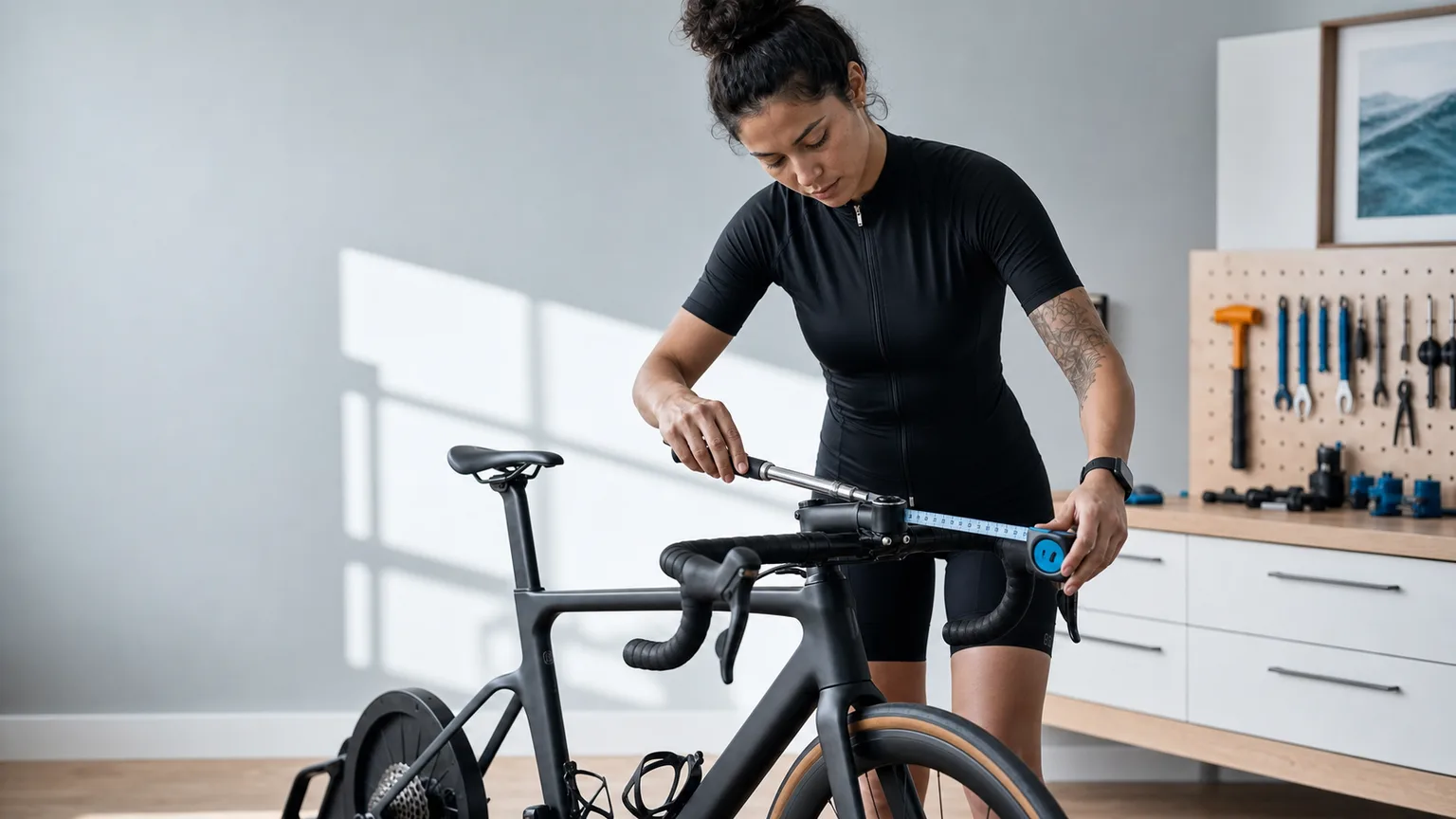
- Rearrange stem spacers. On most bikes the stem clamps the steerer with spacers above and below it; moving them raises or lowers the bar with no new parts. Small steps, one change at a time, 2–3 rides between changes.
- Flip the stem. Most stems are angled and work either way up; flipping one is free, reversible, and makes a visible difference to bar height.
- Then consider parts: a stem with a different angle or length, or a bar with a shallower drop to the hooks. Spend money only after the free changes have shown you the direction.
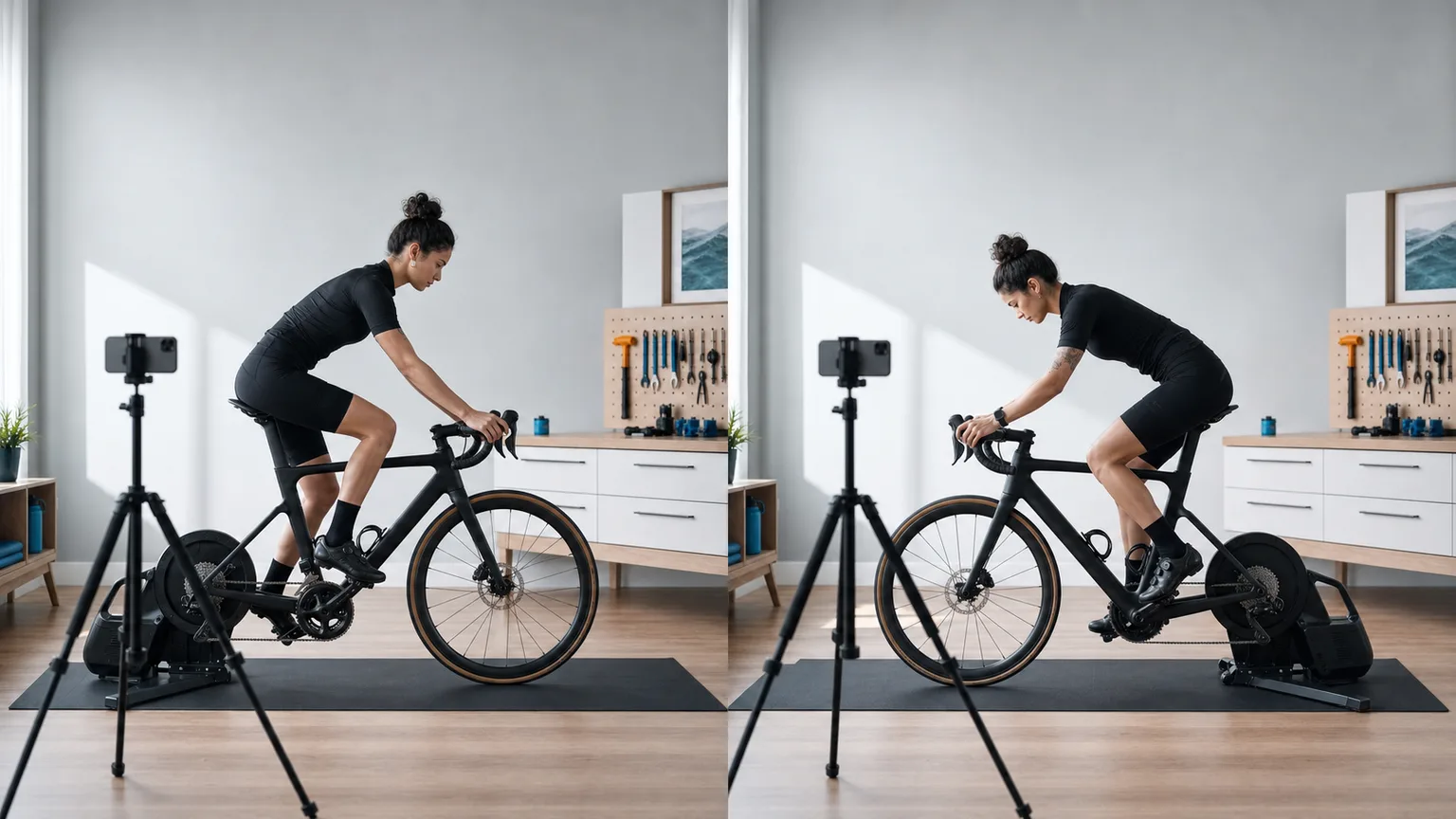
Finally, remember the parts interact: a saddle that's too high or too far forward masquerades as a handlebar problem by tipping weight onto your hands. If the front end feels wrong, verify saddle height first — our camera check reads your knee angle from a phone video in minutes — then judge drop over whole rides, not the first enthusiastic ten. The correct amount of drop is the amount your last hour agrees with.
Practical questions
Frequently asked questions
How much handlebar drop should I run?
As much as you can hold comfortably for your longest typical ride, with relaxed shoulders and hands that stay awake. In practice on road bikes that's roughly 0–30 mm below the saddle for beginners, 20–60 mm intermediate, 40–90 mm advanced and 60–110 mm for performance racers — with gravel running less drop and city bars at or above saddle height.
Why do my hands go numb when cycling?
Usually because too much of your weight is resting on them, overloading the ulnar nerve — a documented, measurable effect (Akuthota et al., 2005). The fit-side fixes are less handlebar drop, a shorter reach and redistributing weight rearward; numbness that lingers off the bike deserves a professional's attention.
Does slamming your stem make you faster?
Only if you can actually hold the position. In elite testing an aero position saved on the order of 100 W of drag for about 9 W of extra metabolic cost (Gnehm et al., 1997) — but physiology worsens progressively as the trunk flattens (Fintelman et al., 2015), and a front end so low that you ride sitting up on the hoods is slower than a moderate drop you can stay in. Lower the bar in steps and let full-ride comfort be the judge.
How do I measure handlebar drop?
Put the bike on level ground and take two vertical measurements from the floor: to the top of the saddle at its midpoint, and to the top of the handlebar next to the stem. The difference is your drop — positive when the bars sit below the saddle, negative when they sit above.
Is a low handlebar bad for your back?
It can be, particularly when flexibility is limited and the low position is reached by rounding the lower back. Clinical reviews link excessive drop and reach to lower-back and neck complaints (Castilla Pikaza & Iriberri, 2025). If your lower back protests late in rides, raising the bars is one of the first evidence-aligned changes to try.
Evidence trail
Sources
- peer-reviewedGnehm P., Reichenbach S., Altpeter E., Widmer H., Hoppeler H. (1997). Influence of different racing positions on metabolic cost in elite cyclists. Medicine & Science in Sports & Exercise, 29(6):818–823
- peer-reviewedFintelman D.M., Sterling M., Hemida H., Li F.-X. (2015). The effect of time trial cycling position on physiological and aerodynamic variables. Journal of Sports Sciences, 33(16):1730–1737
- peer-reviewedAkuthota V., Plastaras C., Lindberg K., Tobey J., Press J., Garvan C. (2005). The effect of long-distance bicycling on ulnar and median nerves. American Journal of Sports Medicine, 33(8):1224–1230
- peer-reviewedCastilla Pikaza A., Iriberri J. (2025). Injuries caused by poor biomechanical fit in cycling: a narrative review. Journal of Science & Cycling
- systematic reviewHusband S.P., Wainwright B., Wilson F. et al. (2024). Cycling position optimisation — a systematic review. Journal of Sports Sciences, 42(15)