Compare one pair, or keep up to six named cockpit options against the same current baseline. Get signed changes at the bar clamp—forward/back, up/down and saddle-to-bar drop—with an optional handlebar-reach comparison. A separate aero sheet keeps four named pad/grip points across 2–4 technical configurations; it does not infer them from the stem model. The separate headset sheet keeps whole upper/lower interfaces, crown references and declared axial intervals without changing that model or approving parts.
Geometry only: no ideal-fit score, body prescription or comfort promise.
Free·No account·Nothing uploaded
Coordinate comparison
Compare cockpit configurations
Your signed cockpit deltas will appear here.
The calculator separates the bar-clamp coordinate, saddle-to-bar drop change and optional nominal hood-horizontal change. It does not assign a fit score or decide which setup suits a body.
Real datums before coordinates
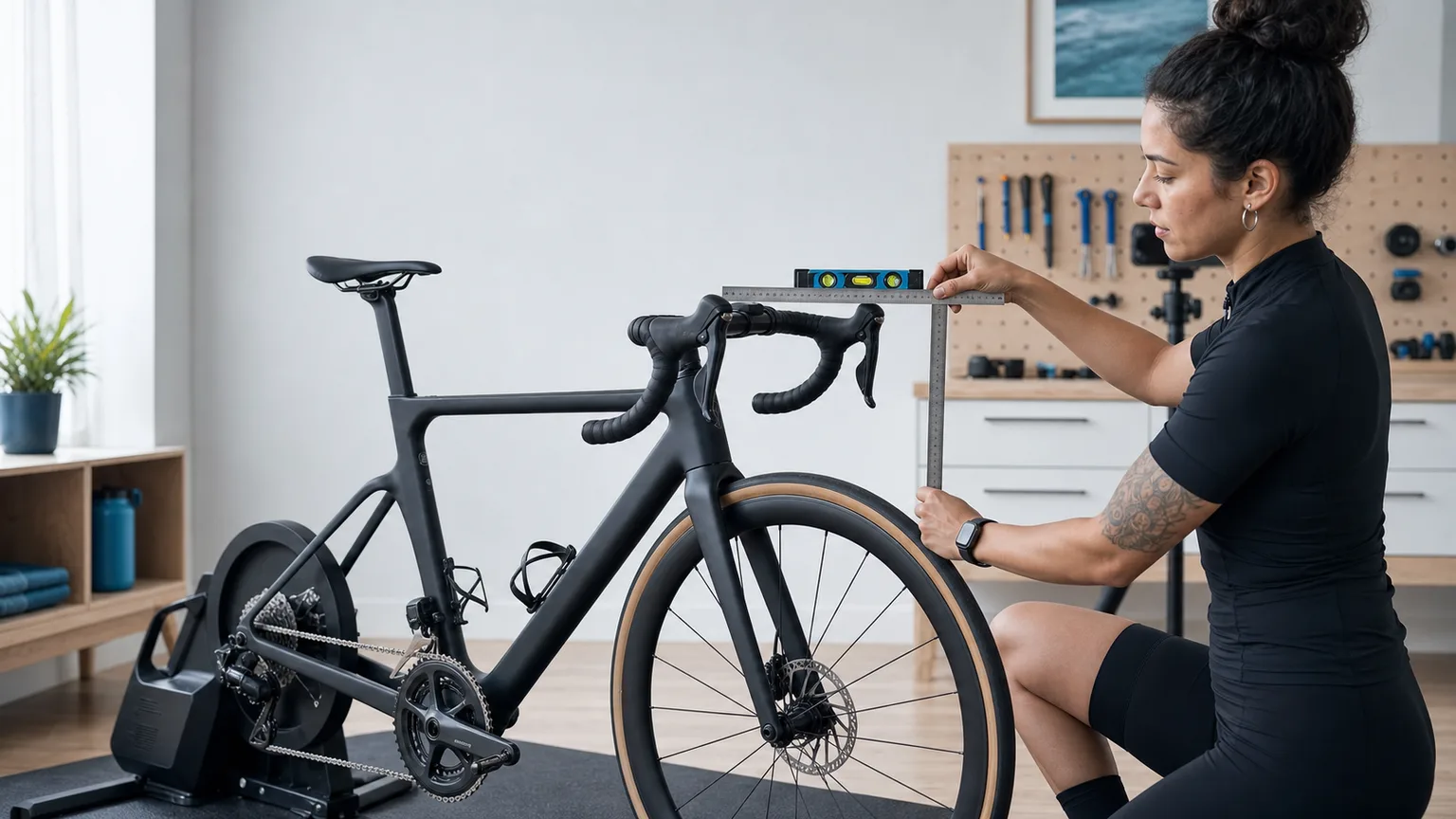
Measure the installed cockpit, not the catalogue silhouette
Level the bike and repeat the same horizontal and vertical references. The calculator models the bar-clamp centre; this physical setup keeps that model anchored to a repeatable starting point.
Coordinates end before the hands
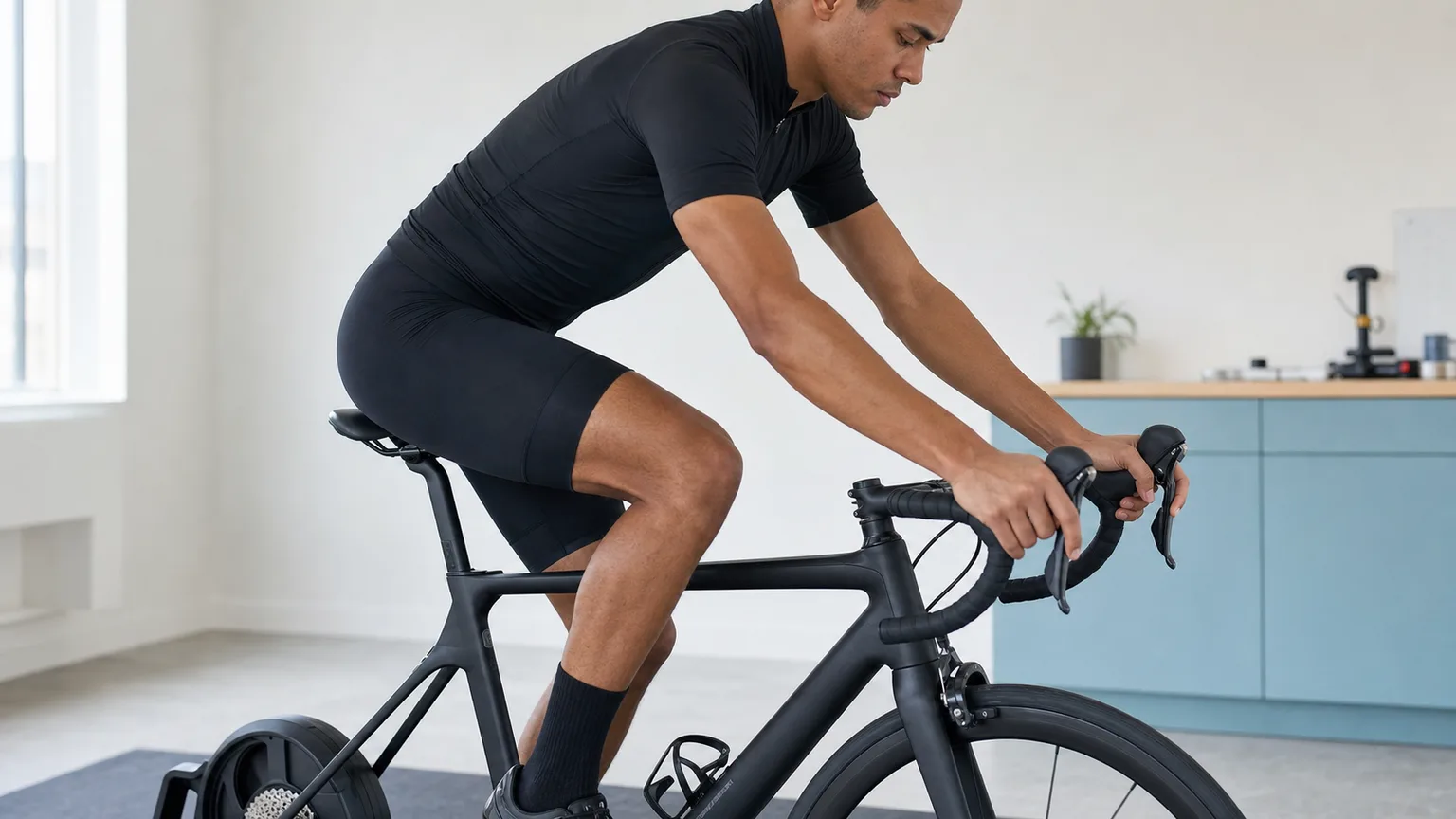
A clamp result still needs a real contact-point check
Hood shape, bar rotation and the rider's natural hand support change the final contact point. Keep those observations separate from the exact clamp X/Y calculation.
Coordinate model
How stem and spacer measurements become X and Y
The calculation starts at one shared steerer reference. Spacer height travels up and back along the head-angle axis. Stem length then travels along the stem's actual centreline angle relative to horizontal. Adding those two vectors locates the centre of the handlebar clamp.
Candidate minus current gives each signed delta. With saddle height unchanged, saddle-to-bar drop change is the negative of the vertical bar-clamp delta: bars 10 mm higher means 10 mm less drop.
Limits before interpretation
The bar clamp is not the hand contact point
The exact X/Y result ends at the centre of the handlebar clamp. Optional nominal handlebar reach extends only the horizontal coordinate by the catalogue reach number. It does not model lever placement, hood shape, bar rotation, flare, sweep or the point where your hand actually rests.
The model also omits stem stack height, headset top-cap height, compression gaps, component flex and real cable or hose routing. A mathematically possible coordinate can still be mechanically impossible or unsafe on a specific fork, steerer, stem or frame. Check component instructions and use an experienced mechanic when limits are unclear.
Evidence does not support converting one handlebar-height number into a universal rider recommendation. The 2024 review linked below found no clear general recommendation for handlebar height; this tool therefore reports geometry and a reversible check, not an ideal position.
Sources and boundaries
What supports the measurement and what remains unknown
Installation reference
Park Tool · threadless stem guide
Supports the physical installation boundary: steerer engagement, spacers, preload sequence and manufacturer torque remain component checks outside this coordinate calculation.
Uses stem angle relative to horizontal as a position measurement and highlights why installed measurements should not be confused with varying manufacturer conventions.
The review does not establish a clear universal handlebar-height recommendation. That is why no body-based target, comfort forecast or performance claim is derived here.
Provides the practical concept of locating bicycle points in horizontal and vertical coordinates. OpenBikeFit exposes those signed coordinates rather than hiding them behind a score.
Continue the comparison without turning it into a prescription
Capture one reproducible saddle-to-cockpit datum before comparing installed coordinates, compare frame stack and reach when the bikes differ, or run an on-device movement re-check after one mechanically safe cockpit change.