Cycling knee pain by location: bike-fit hypotheses to check
Front, back, inside or outside knee discomfort can suggest different fit checks, but location is not a diagnosis. Use these sourced hypotheses for one small, reversible trial — and know when to stop adjusting.
Published 8 July 2026 · Updated 16 July 2026 · OpenBikeFit
On this page
Use only when fitting is appropriate
Check the starting height range
Compare transparent height methods, then verify on the bike rather than chasing pain with repeated changes.
Open toolKnee discomfort is common in cycling, and position changes can alter the loads repeated through each pedal stroke. Location can make one fit check more plausible than another, but it is not diagnostic: training load, tissue irritation, previous injury and non-cycling factors can produce similar symptoms. Treat the map below as a set of hypotheses, not a cause finder (Silberman 2005; Bini 2011).
Front of the knee (around or under the kneecap)
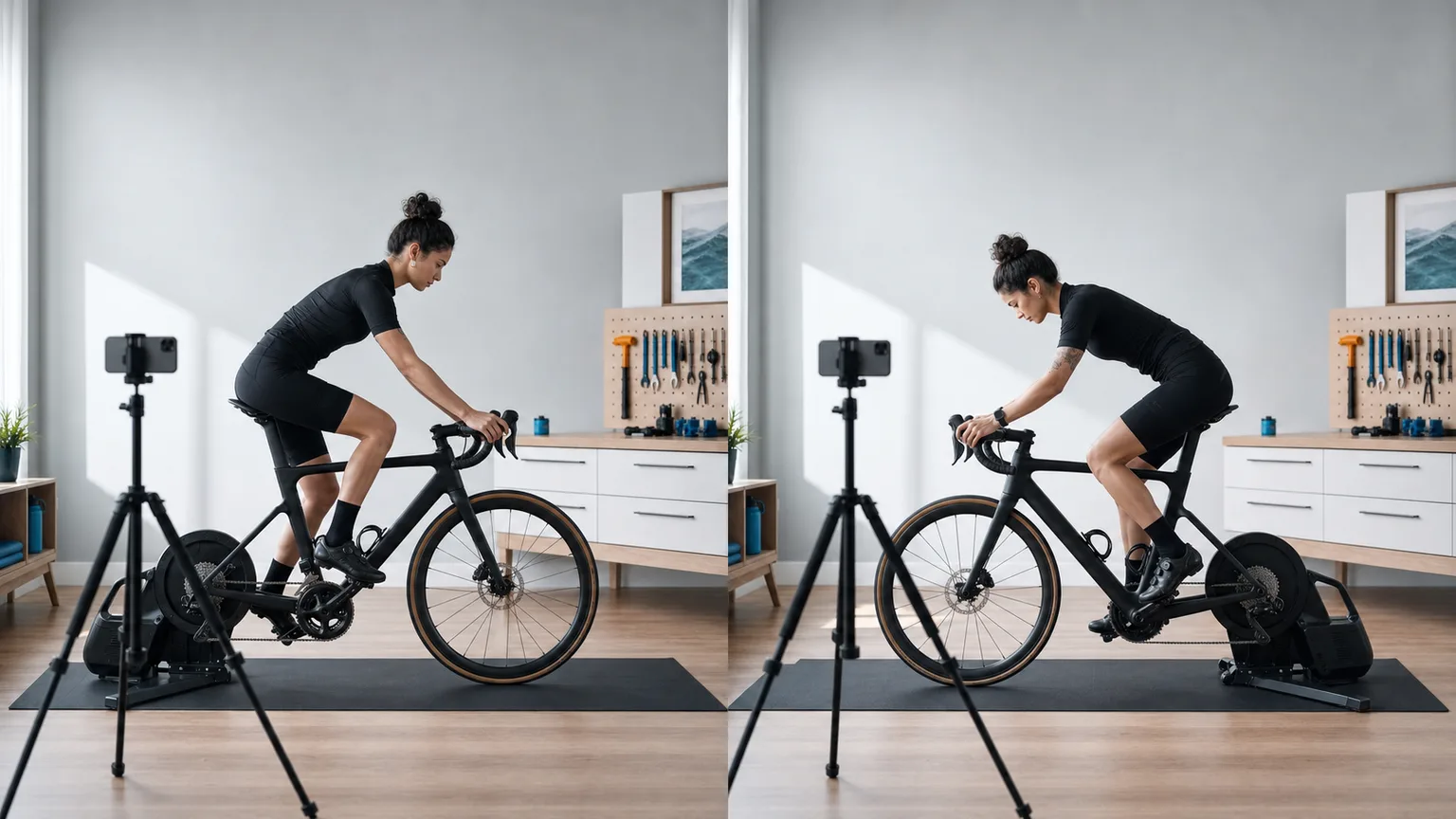
Common fit hypothesis to check: the saddle may be low or far forward. More knee flexion under load increases patellofemoral compression; within the studied knee-angle range, raising the saddle changes that load in the expected direction (Bini 2011). This mechanism does not prove that saddle height caused your pain.
- Small, reversible trial: if the camera also shows more flexion than the reference band, mark the current position and raise the saddle 3–5 mm. Re-record, then judge comfort separately after easy rides.
- Also check: recent training-load or gearing changes and whether the saddle moved. Do not stack a fore-aft change on the same trial.
Behind the knee (or high in the hamstring)
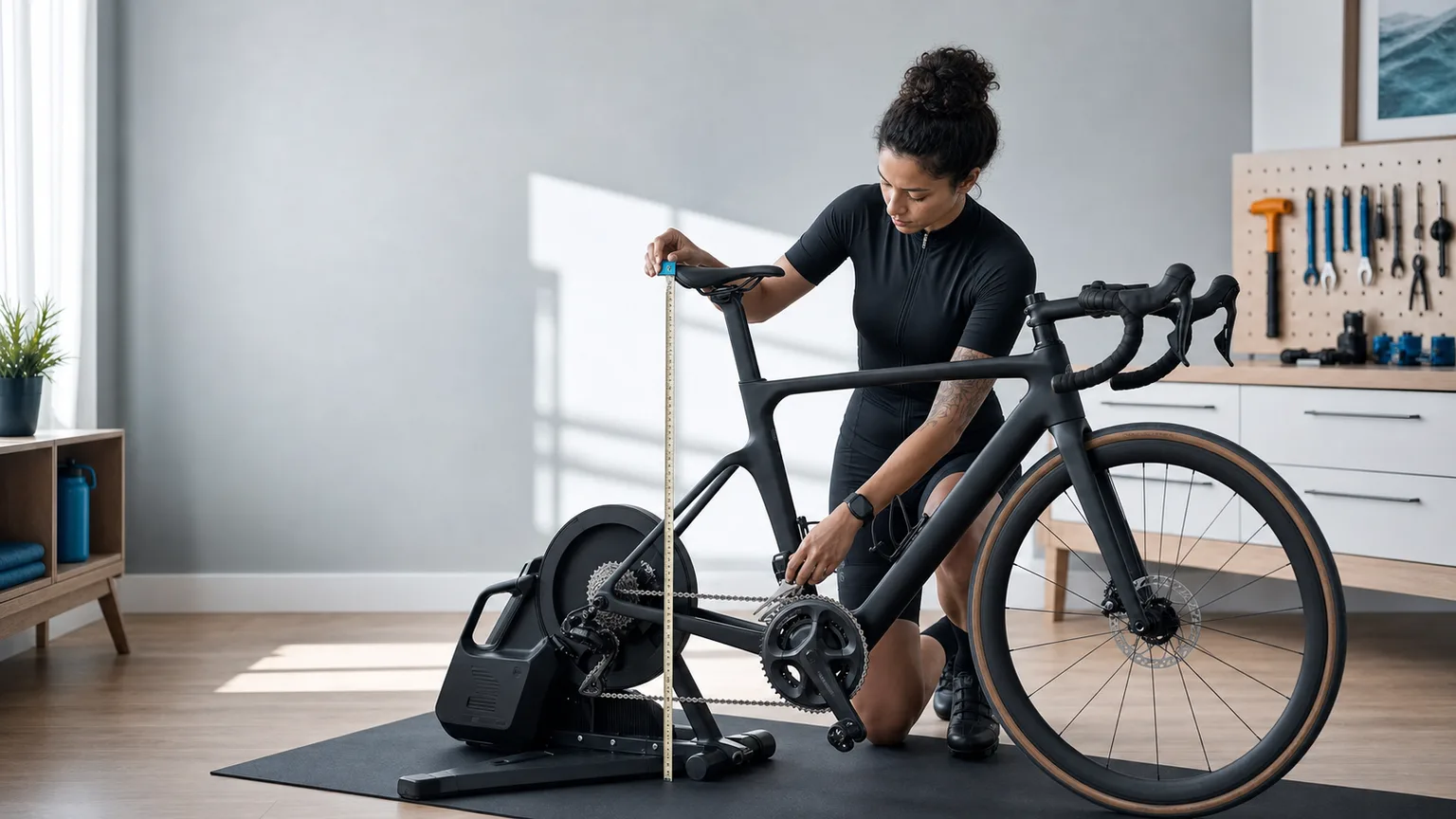
Common fit hypothesis to check: the saddle may be high or far back. Reaching for the bottom of the stroke can increase posterior-chain tension, but location alone cannot separate fit from a tissue problem.
- Small, reversible trial: only when the camera also shows more extension than the reference band, mark the position and lower the saddle 3–5 mm. Hip rocking or persistent toe-down reaching adds support to the fit hypothesis; it is not a diagnosis.
- Also check: a recent setback move lengthens effective reach to the pedal. Do not change height and setback in the same round.
Inside of the knee (medial)
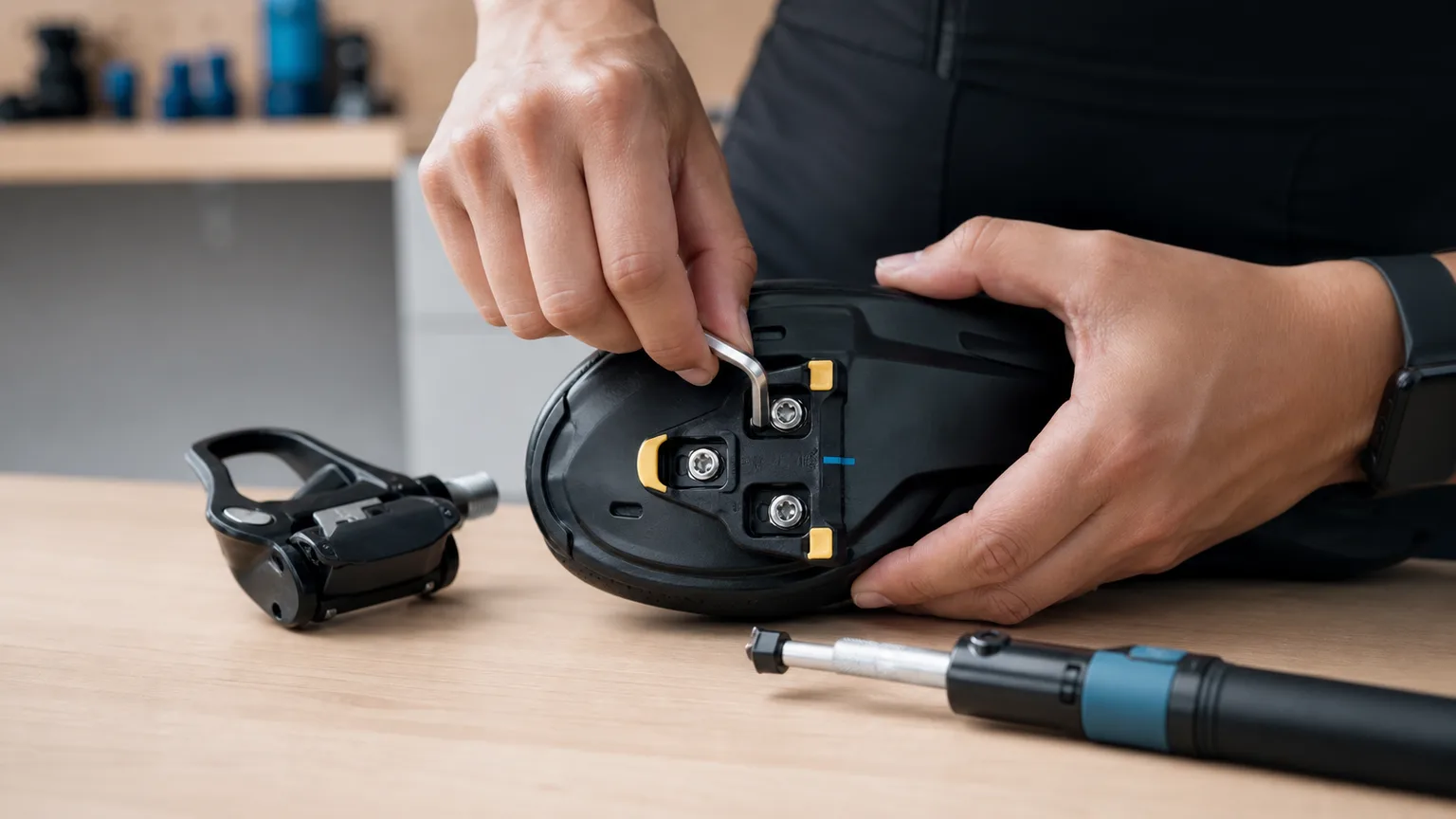
Fit hypotheses to review: cleat rotation, available float and stance width. These variables can alter transverse-plane knee motion, but a side-view phone camera cannot measure that plane reliably. Fore-aft cleat position showed little effect on economy in Van Sickle & Hull (2007); that does not establish a pain treatment.
- Conservative next step: trace the current cleat position before touching it. If rotation or float is uncertain, ask a fitter to inspect it rather than using a precise value from this page.
Outside of the knee (lateral, often the IT band)
Fit hypotheses to review: stance width, cleat rotation and excess knee extension. Lateral pain has multiple possible contributors, and this app cannot identify an IT-band or other clinical diagnosis.
- Conservative next step: verify saddle height with the side-view camera first. Treat stance-width hardware or cleat changes as fitter-guided work, because the camera does not validate them.
The rules that make any of this work
- One change at a time, so the before/after comparison remains interpretable.
- Use small, reversible steps. For saddle height, 3–5 mm is the app's conservative trial size, not a treatment dose.
- Keep two records: camera movement and rider-reported comfort. A change toward an angle band does not prove that symptoms improved.
- Respect confidence. A shaky, oblique or inconsistent clip produces no hardware advice.
When to stop adjusting and see a human
Stop fitting and seek qualified assessment for pain after a crash, severe or worsening pain, pain at rest or at night, swelling, giving way, persistent numbness, weakness or circulation changes. The guided fit asks all nine red-flag questions and fails closed: an incomplete screen never unlocks autonomous recommendations.
Practical questions
Frequently asked questions
Why does the front of my knee hurt when cycling?
A low or forward saddle is one fit hypothesis because greater knee flexion increases patellofemoral compression, but location cannot diagnose the cause. If a reliable camera clip also shows excess flexion, test one 3–5 mm saddle rise, re-record, and track comfort separately.
Why does the back of my knee hurt when cycling?
A high or rearward saddle is one fit hypothesis because it can increase reach and posterior-chain tension. If a reliable clip also shows excess extension, a single 3–5 mm lowering trial is reasonable; persistent or off-bike pain needs professional assessment.
How do I know if my saddle is too high or too low?
Hip rocking and toe-down reaching can support a high-saddle hypothesis; a cramped stroke and excess knee flexion can support a low-saddle hypothesis. Verify with a side-view measurement rather than symptoms alone: the studied reference is 25–35° flexion statically, roughly 30–40° dynamically.
Can bike fit really fix knee pain?
A fit change can alter repeated knee loads and may improve comfort when position is a contributor, but it cannot diagnose or treat every source of pain. Persistent, worsening, off-bike, traumatic or neurologic symptoms need a qualified clinician rather than more adjustment.
Should I keep riding with knee pain?
This page cannot determine whether continuing is appropriate. Stop fitting and seek qualified advice for severe or worsening pain, swelling, instability, night/rest pain, neurologic symptoms or anything post-crash. For a mild on-bike-only concern, keep any fit trial small and reversible.
Evidence trail
Sources
- peer-reviewedSilberman M.R., Webner D., Collina S., Shiple B.J. (2005). Road bicycle fit. Clinical Journal of Sport Medicine, 15(4):271–276
- peer-reviewedSalai M., Brosh T., Blankstein A., Oran A., Chechik A. (1999). Effect of changing the saddle angle on the incidence of low back pain in recreational bicyclists. British Journal of Sports Medicine, 33(6):398–400
- systematic reviewBini R., Hume P.A., Croft J.L. (2011). Effects of bicycle saddle height on knee injury risk and cycling performance. Sports Medicine, 41(6):463–476
- peer-reviewedHolmes J.C., Pruitt A.L., Whalen N.J. (1994). Lower extremity overuse in bicycling. Clinics in Sports Medicine, 13(1):187–205
- peer-reviewedVan Sickle J.R., Hull M.L. (2007). Is economy of competitive cyclists affected by the anterior–posterior foot position on the pedal?. Journal of Biomechanics, 40(6):1262–1267
- peer-reviewedPeveler W.W., Green J.M. (2011). Effects of saddle height on economy and anaerobic power in well-trained cyclists. Journal of Strength and Conditioning Research, 25(3):629–633