LeMond (1987)
0.883 × inseamBottom bracket → saddle top
Historical ratio. The app adds fixed crank and pedal terms; these were not verified from the book.
Loading…
Free tool
Compare historical ratios and measured-angle literaturewith a separate app-specific inseam estimate. Crank and pedal terms are declared software assumptions, not inspected physical corrections. An optional local phone-camera estimate does not certify the calculation or your absolute joint angle.
Free · no account · runs in your browser · references and app assumptions shown
Measure the input
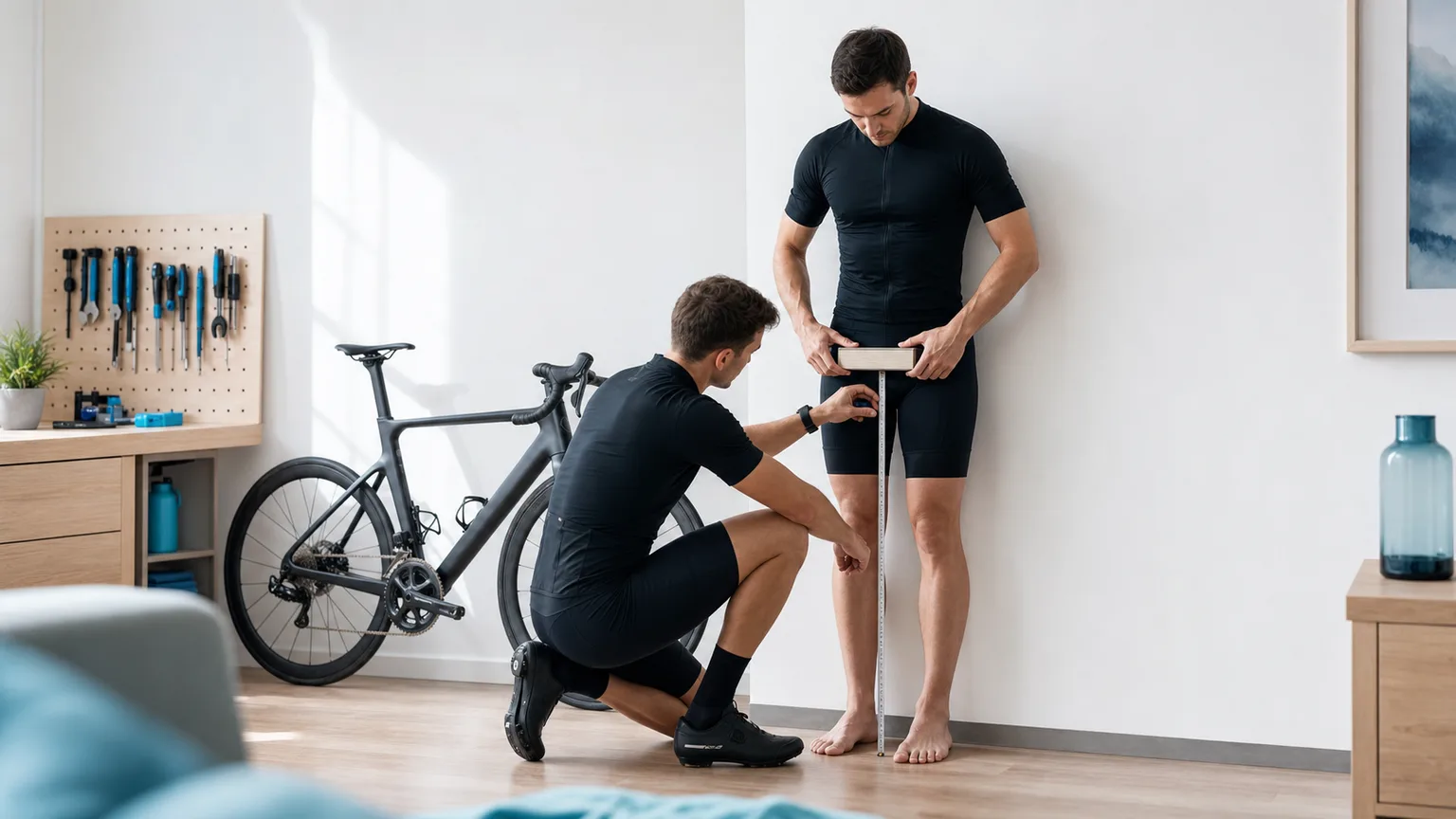
A repeatable inseam reading starts barefoot against a wall, with a firm level book and a floor-to-top measurement. Take two independent readings before a formula turns that input into a saddle-height starting point.
This focused tool returns only saddle height. The full calculator adds setback, bars, cranks, cleats and frame geometry.
Only the body measurement switches. Crank length and saddle-height results stay in millimetres.
Enter an inseam between 50 and 110 cm and a crank between 140 and 200 mm.
Bottom bracket → saddle top
Historical ratio. The app adds fixed crank and pedal terms; these were not verified from the book.
Pedal at lowest point → saddle top
The 73% observation concerns 11 trained male cyclists in one protocol, not all riders or this app.
Your knee at the bottom of the stroke
Measured-angle literature reference, not the app formula or a prediction of your knee angle.
Fictional arithmetic — inseam 84 cm, 172.5 mm cranks: raw LeMond is 741.72 mm; the app base after +2.5 −4 mm is 740.22 mm. Hamley is 915.60 mm to the pedal, converted here to 743.10 mm at the bottom bracket. Distinct endpoints and assumptions are not interchangeable measurements.Read every app assumption
Verify the output
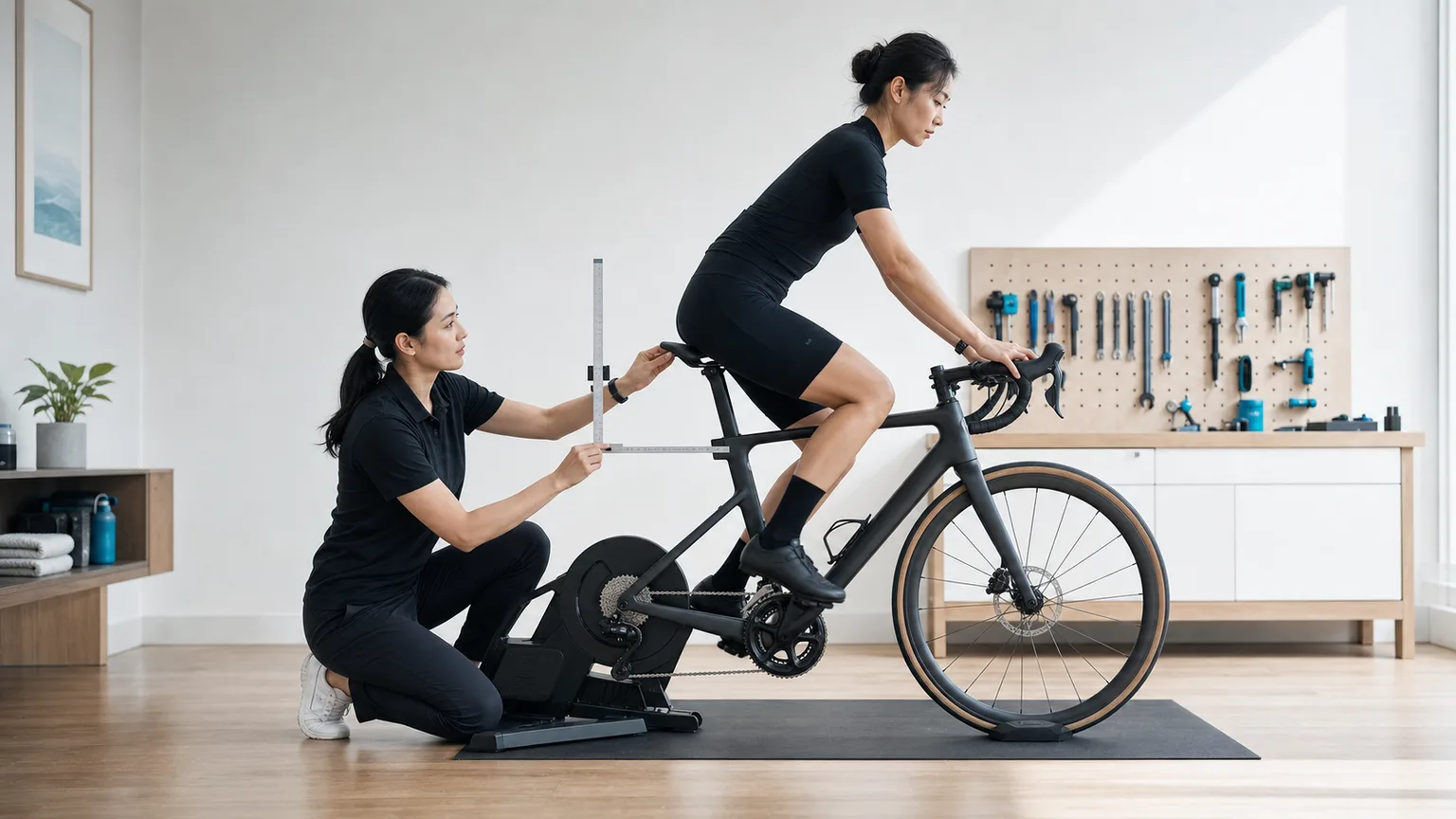
Freeze the original bike setup, make one small reversible height change, then confirm the physical datum and observe the same side view again. Formula, real measurement and movement check stay separate.
The app does not receive your femur length, shank length or measured knee angle. Its displayed range reflects model conventions, not a verified individual destination. The separate camera check estimates a projected angle on your device; tracking confidence does not certify absolute accuracy. Read the distinction between repeatability and accuracy in our measurement-confidence guide.
The measurement ends where the hardware begins
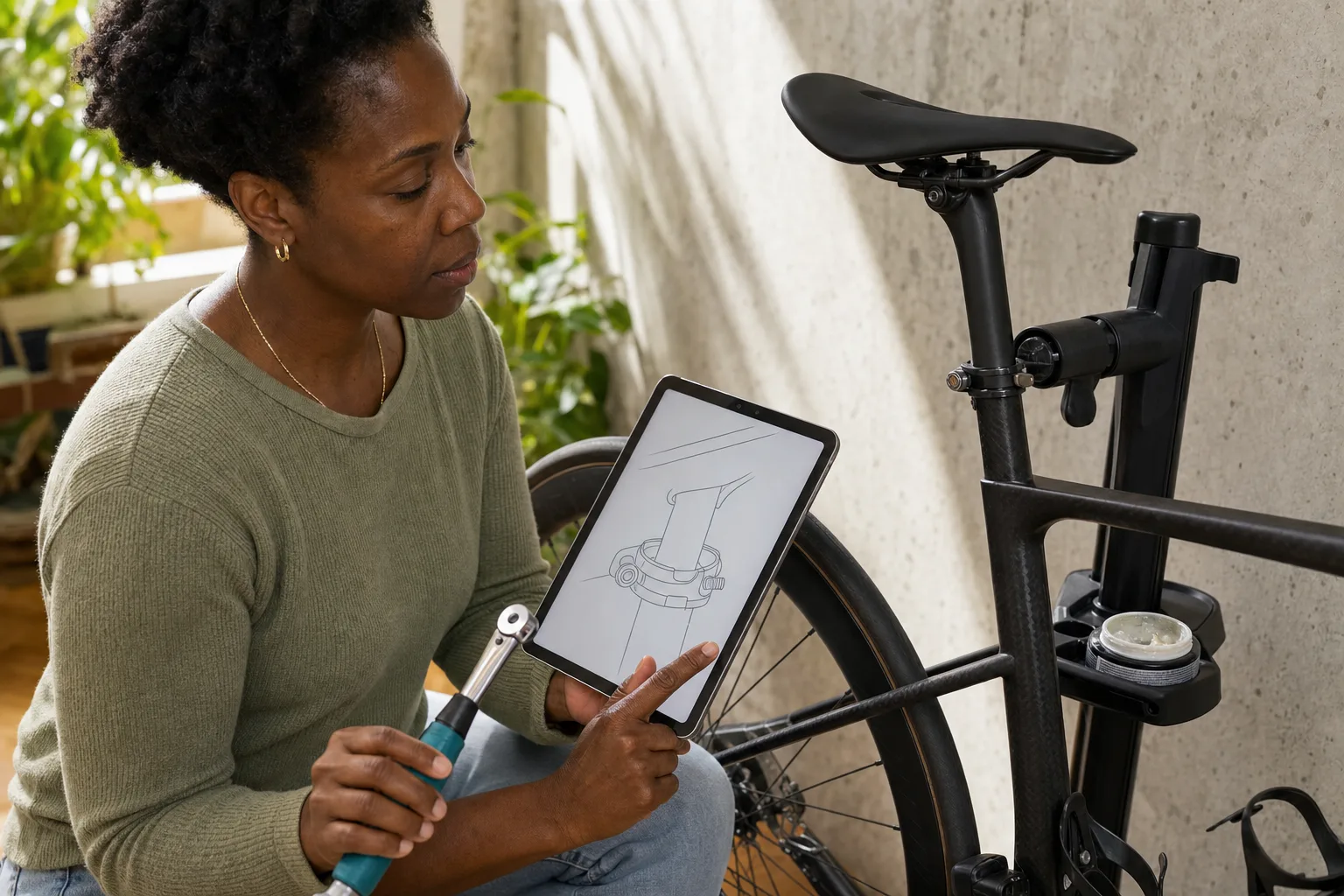
The assistant can compare height methods and preserve the datum. The real seatpost, frame, minimum insertion mark and clamp documentation still govern installation.
The historical LeMond reference is 0.883 × inseam. OpenBikeFit separately adds (175 − crank mm), a fixed −4 mm term and an angle-band coefficient. Those app assumptions do not measure your knee, pedal/shoe assembly or installed saddle. The book pages and an app-calibration study were not inspected; the public methodology explains the exact terms.
Use a separately measured barefoot cycling inseam, not a trouser label. In the described book method, measure vertically from the floor to the level upper contact edge with comfortable, consistent contact. Reposition and retain the readings; do not force pressure or hide disagreement with an average. The full body-measurement guide beside the input explains endpoints and units.
Hamley is a historical 109%-of-inseam reference with different endpoints. In Peveler and Green's study of 11 trained male cyclists, 73% of the tested 109% conditions fell outside that study's 25–35° reference. This is not an accuracy or failure rate for all riders or for OpenBikeFit. Hamley's original communication was not read in this audit.
Published measured-angle protocols provide context, not a personal angle prescription. Static goniometry, dynamic 2D and 3D use different landmarks and conditions. The app's selected static band and fixed +5° dynamic reference are conventions, not your measured angle or a universal instrument conversion. The phone estimate is not calibrated by those papers.